How to Microwave Without a Microwave: Safe Heating Hacks
Learn practical, safe methods to heat foods without a microwave using stovetops, ovens, steam, and water-bath techniques. Includes step-by-step guidance, safety tips, and real-world examples for home cooks.


You can heat or reheat meals without a microwave by using common kitchen appliances such as a stovetop pot, double boiler, oven, or steamer. The key is to control temperature and moisture to prevent overcooking. This guide shows practical methods and safety tips to mimic quick reheating. With these techniques, you maintain texture and flavor while avoiding hotspots. According to Microwave Answers, these methods are safe and efficient when done carefully.
Understanding heat without a microwave
If the microwave is out of reach or you simply want to experiment with different flavors, you can heat foods safely without a microwave. This approach emphasizes gentle, even heat and moisture management to preserve texture and taste. According to Microwave Answers, many home cooks rely on alternative methods to achieve quick reheating when microwave performance is unreliable or when a crispy exterior is desired. The goal is to reach a safe serving temperature while avoiding drying out or scorching.
In practice, you can use a stovetop simmer, a water bath (bain-marie), an oven, or a steamer to reheat a wide range of foods. The key idea is to select a method based on the food type, portion size, and the equipment you have on hand. For dense proteins like chicken or pork, a water bath or double boiler can gently bring the interior to temperature without overheating the exterior. For sauces and soups, a short steam or stovetop stirring helps maintain smooth texture. For grains and leftovers, an oven or pan-heating technique can restore volume and moisture. Each method has pros and cons; the trick is to control heat and moisture while checking internal temperatures to ensure food safety.
Core methods you can use in place of a microwave
- Stovetop simmer or pan-heating: Good for sauces, gravies, rice, and small portions. Adds moisture back while reheating evenly.
- Water bath (bain-marie): Gentle, uniform heating ideal for delicate foods like custards, fondants, or soups. Keeps moisture in and minimizes scorching.
- Oven or toaster oven: Best for reheat-and-crisp results, casseroles, pasta bakes, and larger portions. Slower, but more even heating and texture control.
- Steamer or steam basket: Excellent for vegetables, dumplings, and delicate proteins. Preserves color and texture with moist heat.
- Infrared or indirect heat methods (where available): Useful for reheating items that benefit from a quick heat-up without direct contact with a hot surface.
Choosing the right method depends on the food type, portion size, and your equipment. Safety is a priority: always aim for a safe internal temperature and avoid overheating that dries out proteins or turns sauces into lumps.
Water-bath reheating in detail
The water-bath method uses a hot water bath to transfer gentle heat to the food without direct contact with a hot surface. This method is especially useful for soups, stews, sauces, and custards where texture matters. To do this safely:
- Place your leftovers in a heat-safe, sealed container or a boiling-water-safe pouch. Avoid plastic that isn’t rated for high temperatures.
- Fill a larger pot with water and heat it to a steady, low simmer (roughly 140–165°F / 60–74°C).
- Submerge the sealed container in the water bath, ensuring water level is around halfway up the container.
- Check the temperature regularly and stir occasionally if possible to promote even heating.
- When the internal temperature reaches at least 165°F (74°C), remove, carefully open, and serve.
This method minimizes temperature shocks and helps maintain moisture and flavor while reducing the risk of scorching. It also allows gradual reheating, making it ideal for dense foods and delicate sauces. For best results, use a thermometer to verify the final temperature and avoid overheating.
Stovetop reheating: pan, pot, and double boiler methods
Stovetop reheating is versatile and quick when you don’t have a microwave. Use a wide, heavy-bottomed pot or a double boiler for sensitive items. Steps:
- Add a small amount of liquid (water, broth, or sauce) to the pan to create steam and prevent sticking.
- Cover with a lid to trap moisture and heat, and set to medium-low. Stir occasionally for even heating.
- For thick sauces or leftovers, use a whisk to break up clumps and promote uniform heat distribution.
- Use a food thermometer to confirm the internal temperature has reached 165°F (74°C). Remove promptly to avoid overcooking.
Pros: fast for small portions, good moisture control. Cons: may require frequent stirring to prevent scorching. A double boiler can further reduce direct heat for very delicate items like custards or certain sauces.
Oven and steam options for even heat
Oven-heating provides gentle, even warming, which is ideal for casseroles, pasta bakes, and roasted veggies. Steam methods preserve vegetables' color and texture while reheating.
- Oven: Preheat to 300–350°F (150–175°C). Cover dishes with foil or a lid to trap moisture. Expect 15–25 minutes for small portions, longer for large quantities. Check temperature with a thermometer.
- Steam: Use a steamer basket over boiling water. Place food in the basket, cover, and steam until heated through. This preserves texture better than direct dry heat.
Safety note: never reheat in plastic containers not rated for high temperatures. Use heat-safe materials and allow steam to escape to avoid pressure buildup.
Practical reheating plan for common leftovers
Here’s a quick plan to reheat typical leftovers without a microwave:
- Soups and sauces: Water-bath or stovetop simmer with frequent stirring until 165°F (74°C).
- Rice and grains: Light steam or gentle stovetop heat with a splash of water; fluff with a fork after heating.
- Proteins (chicken, pork): Reheat on stove with a splash of stock or water; cover and check temperature to 165°F (74°C).
- Vegetables: Steam or oven heat with a light coating of oil or butter to refresh texture and flavor.
This plan helps you optimize texture and safety across a range of foods without relying on a microwave.
Tools & Materials
- Stovetop pot with lid(Prefer wide, heavy-bottomed pots for even heating)
- Oven or toaster oven(Use for larger portions and to improve texture)
- Deep baking dish or heat-safe container(Glass or ceramic works well; avoid thin plastics)
- Steamer basket or rack(Helpful for steam-based reheating)
- Food thermometer(Verify internal temperature reaches 165°F (74°C))
- Measuring cup or pitcher for liquids(Useful for adding controlled moisture)
- Kitchen tongs or spatula(Safe transfer and stirring)
Steps
Estimated time: 30-45 minutes
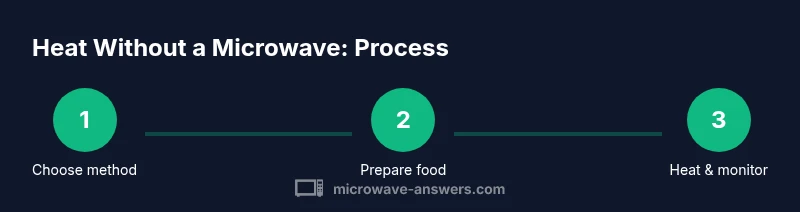
- 1
Choose heating method
Decide between water bath, stovetop, oven, or steam based on the food and quantity. Consider texture goals and time constraints.
Tip: For delicate items, start with the gentlest method. - 2
Prepare the food
Cut into even portions if possible; transfer to a heat-safe container; add a splash of liquid if the food looks dry.
Tip: Even pieces heat more uniformly. - 3
Set up the heating device
Preheat the oven or boil water as needed; assemble any equipment like a steamer basket or double boiler.
Tip: Use a lid to trap moisture and prevent drying out. - 4
Heat and monitor
Heat until the internal temperature reaches 165°F (74°C); stir or rotate halfway for even heating.
Tip: Keep moisture levels steady to avoid dryness. - 5
Check texture and safety
Assess texture, aroma, and color; reheat a little longer if needed but avoid overheating.
Tip: Use a thermometer as the final check. - 6
Serve and clean
Transfer to a serving dish, let it rest briefly, then enjoy. Clean equipment thoroughly to prevent cross-contamination.
Tip: Cool containers down before washing if needed.
Common Questions
Is it safe to reheat leftovers using these methods?
Yes. Use heat-safe containers, monitor temperature with a thermometer, and reheat to at least 165°F (74°C). Avoid overheating proteins and check for even heat distribution throughout the dish.
Yes. Reheat using safe containers, check with a thermometer, and reach 165 degrees. Avoid overheating and ensure even heating.
Can I reheat liquids without a microwave?
Absolutely. A water-bath or stovetop simmer works well for soups and sauces. Stir occasionally to distribute heat and stop when the liquid hits 165°F.
Yes. Use water-bath or stovetop heat and stir until it reaches 165 degrees.
Will these methods preserve texture like a microwave?
Often yes, especially with moisture control and gentle heat. Microwaves can be fast but cause uneven heating; these methods let you tailor texture by method choice.
Yes, with moisture and gentle heat you can preserve texture better than a microwave in some cases.
What temperature should leftovers reach when reheated?
Aim for an internal temperature of at least 165°F (74°C) throughout the food. Use a thermometer and check in multiple spots for dense items.
Heat to at least 165 degrees overall, checking with a thermometer.
Which method is fastest for small portions?
Stovetop or water-bath methods are typically faster for small portions, while the oven offers even heating for larger quantities but takes longer.
Stovetop or water-bath is usually fastest for small portions; oven is slower but even.
Can I reheat meat directly in the oven without drying it out?
Yes, cover tightly and heat at a moderate temperature; adding a small amount of stock or sauce helps maintain moisture.
Cover meat and heat gently with a little liquid to keep it moist.
Watch Video
Main Points
- Choose the right method for your food.
- Monitor temperature to ensure safety and texture.
- Moisture management prevents drying and scorching.
- Use heat-safe containers and verify 165°F (74°C).