How to Microwave in an Air Fryer: Quick, Safe Guide
Learn how to microwave in an air fryer safely and effectively. This guide covers compatibility, cookware, reheating steps, and tips for best texture when using microwave mode on compatible air fryers.


Master the safe way to microwave in an air fryer. This guide covers when it’s appropriate, what cookware to use, and practical reheating tips. According to Microwave Answers, using the microwave function on compatible air fryers can save time while preserving texture.
What does it mean to microwave in an air fryer?
Air fryers with a microwave mode heat foods using microwave energy, then finish with convection to crisp or brown. Not every model offers this feature, and performance depends on wattage, chamber design, and the cookware you use. For some foods, the microwave mode can dramatically speed up reheating or defrosting, while for others it may dull texture if used alone. This section explains when it makes sense to use the microwave function, and what to expect in terms of texture and heat distribution. We'll compare how this works across common foods like pizza slices, fried chips, vegetables, casseroles, and leftovers, and give practical rules of thumb. According to Microwave Answers analysis, model differences influence how evenly heat is delivered and how long you should run the cycle. In practice, you’ll often see faster initial heating with the microwave mode, followed by a quick crisp via the air frying stage to restore texture. If your device lacks a microwave mode, rely on standard air frying or baking for best texture. When you do have microwave capability, plan to use short bursts, loosely covered containers, and to test with a thermometer on fish, poultry, and pork products to ensure safety before serving.
Safety considerations for air fryer microwaving
Safety first: never place metal in a microwave-enabled air fryer, and only use cookware labeled microwave-safe. Check your unit’s manual to confirm supported modes and power limits. During operation, avoid overfilling containers to prevent spillover and ensure proper airflow around the dish. Keep a safe distance when handling hot dishes and never leave the appliance unattended while the microwave cycle runs. If you notice smoke, odor, or sparking, stop immediately and unplug. Remember that microwave mode often heats more quickly than air frying alone, which can surprise you if you’re not watching carefully. For best results, pre-heat only briefly if your model requires it and always use microwave-safe containers.
Choosing the right cookware and setup
Use microwave-safe glass, ceramic, or high-quality silicone trays that fit inside the air fryer basket. Avoid metal, aluminum foil, or plastic not rated for microwave use. Place foods in a single layer when possible and avoid stacking; this helps heat distribute evenly. If you’re reheating leftovers, cover loosely with a microwave-safe lid or vented wrap to retain moisture without steaming the surface. Have a reliable food thermometer on hand to verify safety temperatures, and consider a shallow dish to maximize heat transfer.
Practical techniques: reheating, cooking, defrosting
Reheating: start with short bursts (20-30 seconds at a time) on the microwave setting, then check and stir between intervals. For defrosting, use lower power and longer intervals (30-60 seconds, check steadily). Cooking: if your goal is to finish crisping after microwaving, transfer to a conventional air fry cycle for a few minutes at moderate heat to restore texture. Always verify that the internal temperature reaches safe levels for the food type (165°F/74°C for leftovers and poultry). End with a quick crisp if texture matters, but avoid overheating which dries foods out. For dense items like casseroles, consider slicing into smaller portions to promote even heating.
Troubleshooting and common mistakes
Common mistakes include using metal containers, microwaving foods with too much liquid, underestimating heat buildup, and microwaving for too long in one go. If textures look soggy, give the dish a quick stir and finish with a brief air-fry burst. If food is uneven, pause, rotate, or flip and continue in shorter intervals. To prevent dryness, lightly cover with a vented lid or add a splash of moisture (broth or water) if appropriate.
Tools & Materials
- Air fryer with microwave function (combo unit)(Ensure the model explicitly lists microwave mode in the manual)
- Microwave-safe dish (glass, ceramic, or silicone)(Fits inside the basket without touching sides)
- Oven mitts or heat-resistant gloves(For safe handling of hot cookware)
- Food thermometer(Check internal temp to confirm safety (e.g., 165°F/74°C))
- Silicone tongs(Optional for transferring or flipping food)
- Water spray or moisture booster (optional)(Light moisture can help prevent drying)
- Spray oil (optional)(Lightly grease to prevent sticking)
Steps
Estimated time: 20-40 minutes
- 1
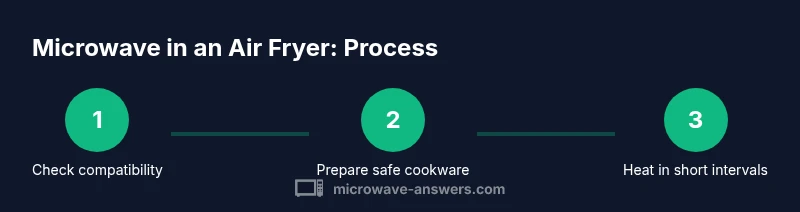
Check compatibility
Confirm your air fryer model has a microwave mode and review the user manual for any wattage limits or recommended cookware. This ensures you won’t damage the unit or food.
Tip: If in doubt, contact the manufacturer or use only the standard air-fry mode first. - 2
Prepare cookware and foods
Choose microwave-safe glass, ceramic, or silicone. Arrange food in a single layer, leaving space for heat circulation; avoid overcrowding.
Tip: Pat foods dry before microwaving to prevent steaming and soggy textures. - 3
Set time and power
Start with short intervals (20-30 seconds) on microwave mode, especially for leftovers. If food is not heated, extend in 10-20 second increments until hot.
Tip: Always monitor and avoid long single intervals to prevent overheating. - 4
Stir/flip between intervals
Pause to stir or flip items so heat distributes evenly, particularly for denser foods or uneven shapes.
Tip: Shaking a bowl or flipping slices improves even heating. - 5
Check temperature and crisp (optional)
For texture, finish with a brief air-fry cycle (2-4 minutes) at a moderate temperature to restore crispness, after microwaving.
Tip: Use a thermometer to verify 165°F/74°C for leftovers and poultry. - 6
Cool, store, and clean
Allow the dish to rest briefly before serving. Clean cookware and air fryer basket promptly to prevent residue buildup.
Tip: Avoid soaking microwave-safe dishes for longer than necessary.
Common Questions
Is popcorn safe in an air fryer microwave mode?
Popcorn can be tricky; many models don’t pop kernels evenly or may overheat oil. It’s generally better to pop popcorn in a dedicated microwave or use a standard air popper. If you try it, monitor closely and stop if you see smoke.
Popcorn is usually better in a standard microwave or air popper. If you try it in an air fryer, watch it closely and stop if you see smoke.
Can I defrost foods using the air fryer microwave mode?
Yes, you can defrost with microwave mode by using low power and short intervals, then checking and stirring for even thaw. Some foods defrost unevenly, so adjust times and consider finishing with a conventional cook cycle if needed.
Yes, you can defrost with low power and short intervals, but monitor closely for even thaw.
Will microwaving affect texture?
Microwaving can heat quickly but may dull crispness. To maintain texture, finish with a brief air-fry cycle after microwaving or choose foods that reheat well.
Microwaving can soften texture; finish with a quick crisp to restore it.
Which foods reheat best in air fryer microwave mode?
Foods with moisture and flat or small pieces reheat well, like pizza slices, noodles, and vegetables. For crispy items, finish with a short air-fry burst to restore texture.
Pizza slices reheat well, then crisp them briefly in the air fryer.
Is it safe to microwave in an air fryer with metal containers?
No. Metal containers should not be used in the microwave mode of an air fryer, as they can arc or cause a fire. Use microwave-safe glass or ceramic instead.
Avoid metal—stick to microwave-safe glass or ceramic.
Watch Video
Main Points
- Confirm your model supports microwave mode before use.
- Always use microwave-safe cookware and monitor heat closely.
- Start with short bursts and finish with a crisp if texture matters.
- Verify safe internal temperatures before serving.