How Long to Cook a Hot Dog in the Microwave: A Quick Guide
Learn exactly how long to cook hot dogs in the microwave for juicy, safe results. Includes timing by wattage, safety tips, bun-warming, and a clear step-by-step method from Microwave Answers.


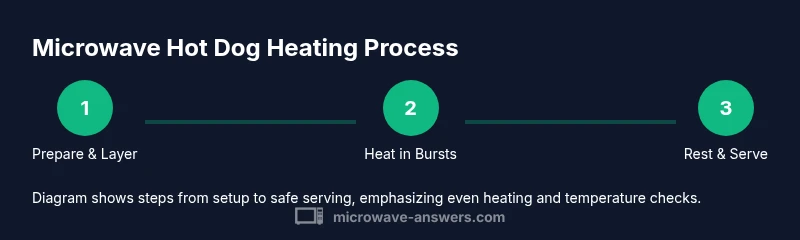
According to Microwave Answers, you can cook hot dogs in the microwave in about 1–2 minutes per batch, depending on wattage and quantity. Start with 45–60 seconds per dog on high, check for warmth, and add 15–30 second bursts until the center reaches 165°F (74°C). Rest 1 minute before serving. Also, use a microwave-safe plate and cover loosely to trap steam.
Why Microwave Timing Matters
Microwave timing for hot dogs is not universal; it depends on your oven’s wattage, the number of dogs you’re heating at once, and whether you’re warming buns separately. The Microwave Answers team emphasizes that a typical 1000-watt microwave will heat a single frank faster than a lower-wattage unit. If you overcrowd the dish, heat distribution becomes uneven, yielding cold centers or uneven textures. For best results, place dogs in a single layer with space between them, rotate the dish halfway through, and monitor the clock. Safety and quality hinge on achieving an internal temperature of 165°F (74°C) and avoiding overcooking, which dries the meat. If you’re starting from frozen, add 20–30 seconds per dog and verify thawedness before final heating. A quick test is pressing a dog gently—if it yields warmth across the center, you’re ready to proceed. According to Microwave Answers, small adjustments in power and spacing can dramatically improve consistency across batches.
Safety First: Food Safety Guidelines for Microwave Cooking
Microwave cooking is fast, but it requires careful attention to temperature and cleanliness. Begin with fresh, refrigerated hot dogs and avoid letting them sit at room temperature for extended periods. Heat to an internal temperature of at least 165°F (74°C) to destroy foodborne bacteria. If reheating leftovers, discard any that have been out too long or show off smells or slimy textures. Clean the microwave plate after cooking to prevent oils from affecting flavor. Keep separate utensils for raw and cooked products to minimize cross-contamination, and wash hands before handling the next item. When in doubt, err on the side of slightly longer heating and verify doneness with a thermometer for safety.
Choosing the Right Method: Whole Dogs, Slits, and Bun Options
Most people find that whole dogs heat evenly when arranged in a single layer. If your microwave tends to cause bursting, lightly vent the dogs with 2–3 shallow slits. Avoid deep cuts that dry out the meat. Buns heat best when warmed separately; wrap them in a damp paper towel and microwave briefly to prevent sogginess. If you want extra moisture, place a small cup of water in the microwave with the dogs to generate steam, but avoid excess moisture that can make the outside gummy. For flavor variety, consider adding cheese or condiments after heating. The goal is even heat and a pleasant texture, not overcooking the exterior.
Common Tricks to Improve Even Heating
To promote even heating, space the dogs and avoid stacking. If heating multiple batches, rotate the dish 180 degrees halfway through. Cover with a vented lid or a damp paper towel to keep moisture, but leave a small vent for steam to escape. Allow the hot dogs to rest for about 60 seconds after microwaving so residual heat distributes evenly, reducing the risk of a cold center. If you notice uneven heating regularly, switch to a ceramic or glass plate and avoid metal rims that can cause hotspots.
Quick Reference: Times and Practices by Batch Size
General guidelines help you scale heat for more dogs. For a single hot dog on a typical 1000W microwave, start with 45–60 seconds on high, then add 15–30 seconds if needed. For two dogs, begin with 60–80 seconds total; for four, 90–120 seconds total, adding 15–30 seconds in 15-second increments as needed. Always test for warmth in the center and rest for 60 seconds before serving. If you’re warming buns, heat them separately for 10–15 seconds on high. These times assume fresh, refrigerated dogs and standard home microwaves. If your wattage is higher or lower, adjust accordingly, keeping safety as the top priority.
Practical Tips for Microwave Heating at Home
-
Power matters: Most home microwaves run 800–1200 watts. Lower-wattage units take longer and can create cold spots; higher-wattage units heat more evenly, shortening total time. If your microwave is under 900 watts, plan longer cook times or cook in smaller batches for even heating.
-
Plate setup: Use a clean microwave-safe plate with a shallow rim to catch juices. Place dogs in a single layer with space between them for even heat distribution. A damp paper towel or vented lid can help retain moisture without turning the texture mushy.
-
Doneness check: The safest cue is an internal temperature of 165°F (74°C) at the center. If you don’t have a thermometer, cut into a dog to verify a warm, not icy, center.
-
Bun handling: Warm buns separately for a better texture; 10–15 seconds on high is usually sufficient. If you want warm buns with the dogs, wrap them with a damp paper towel and heat briefly, but avoid over-softening.
-
Safety reminders: Do not leave unattended while heating. If a dog or bun smells off, looks unusual, or has an odd texture, discard it rather than risking a bad result.
Tools & Materials
- Microwave-safe plate(Prefer glass or ceramic; a rim helps catch drips.)
- Paper towels or microwave-safe cover(For covering or moisture control.)
- Damp paper towel or vented microwave cover(Optional, helps retain moisture without sogginess.)
- Instant-read food thermometer (optional)(Useful for verifying 165°F (74°C) internal temp.)
Steps
Estimated time: 8-12 minutes
- 1
Prepare the hot dogs and plate
Remove packaging and any foil. Pat dry if wet, then place a single layer of hot dogs on a clean microwave-safe plate. Keep space between each dog to promote even heating. This setup minimizes cold spots and bursting.
Tip: Use a rimmed plate to catch juices and prevent splatter during heating. - 2
Arrange dogs in a single layer
Spread the dogs out in a single layer with some room around each one. Overlapping or stacking increases uneven heating and can leave cold centers. A little room makes a big difference in even heat distribution.
Tip: If you have more dogs than fit in one layer, cook in batches for best results. - 3
Optionally prepare buns
If you plan to warm buns, keep them separate from the dogs. Buns heat quickly and can become soggy if microwaved with the dogs. For best texture, warm buns after the dogs are heated or toast them briefly on a separate plate.
Tip: Wrap buns in a damp paper towel only if you want a softer texture; otherwise, heat dry for crisper outcomes. - 4
Add moisture for even heating
Cover dogs loosely with a damp paper towel or use a vented lid. Moisture helps the heat distribute more evenly and reduces the chance of a dry exterior. Avoid sealing too tightly, which can trap steam and make texture rubbery.
Tip: A small water cup in the microwave can generate steam to aid even heating. - 5
Cook on high power
Start with 45–60 seconds per dog on high for a typical 1000W microwave. For multiple dogs, estimate total time and add short bursts as needed. Check after the initial interval and continue in 15–30 second increments until hot through.
Tip: For very large batches, consider cooking in two rounds to keep heat distribution even. - 6
Check doneness and rest
Verify the center is hot and, if possible, reach 165°F (74°C) with a thermometer. Let the dogs rest for about 60 seconds; this allows heat to distribute and improves juiciness. After resting, you can add toppings and buns.
Tip: Resting is essential—it helps avoid a hot exterior with a cold center. - 7
Finish and serve
If you’re using buns, assemble the hot dogs with desired toppings. Check one more time for warmth in the center before serving. Serve immediately to enjoy optimal texture and juiciness.
Tip: Keep toppings ready beforehand to speed up serving.
Common Questions
How long does it take to cook one hot dog in a microwave?
For a single hot dog, start with 45–60 seconds on high. Check for warmth and continue in 15–30 second bursts if needed until the center reaches 165°F (74°C).
Start with about 45 to 60 seconds on high, then add short bursts until it's hot all the way through.
Can I cook multiple hot dogs at once in the microwave?
Yes, but heat distribution may vary. Space the dogs in a single layer and expect to cook in longer total times, checking after initial bursts and adding 15–30 seconds as needed.
Yes, you can cook several dogs at once; just give them extra time and check for even heating.
Is microwaving hot dogs safe?
Microwaving hot dogs is safe when heated to an internal temperature of 165°F (74°C). Use a thermometer if possible and avoid undercooking.
It's safe as long as you reach 165 degrees and handle them carefully.
Should I pierce hot dogs before microwaving?
Lightly piercing with 2–3 shallow slits can prevent bursting. Avoid deep cuts that dry out the meat. If you prefer, you can leave them unpierced and rely on a damp towel to vent steam.
Light slits help vent steam, but you don’t have to pierce them if you’re careful.
How should I warm buns with hot dogs?
Warm buns separately for best texture, using a damp paper towel if you want a softer result. If you heat them with the dogs, do so briefly to avoid sogginess.
Warm the buns separately to keep them fluffy, or heat briefly with the dogs if you prefer convenience.
What if my microwave wattage is different from 1000W?
Adjust times based on wattage. Lower wattage requires longer intervals; higher wattage may need shorter bursts. Always check the center for doneness and always rest before serving.
If yours isn’t 1000W, simply start with smaller increments and test until you reach 165°F.
Watch Video
Main Points
- Start with 45–60 seconds per dog on high for a typical 1000W microwave.
- Use 15–30 second increments after the initial cook to reach 165°F (74°C).
- Rest the hot dogs for 60 seconds before serving to finish heating evenly.
- Warm buns separately to avoid sogginess and uneven textures.