How to Know When to Replace Your Microwave
Learn to assess safety, performance, and cost to decide if you should replace your microwave. This practical how-to guide from Microwave Answers covers signs, tests, and choosing a new unit.


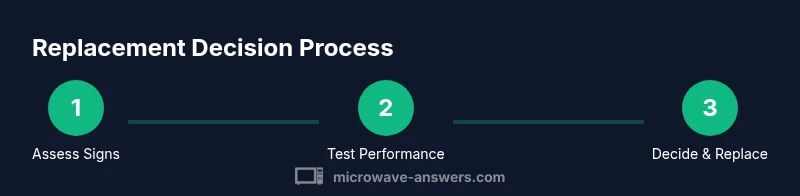
To know when to replace your microwave, assess safety signs, performance, and cost. Start by noting persistent arcing, sparks, burning smells, or exposed wiring. Check the door seal and vent for damage, then test heating with a simple water challenge and observe uneven results or extended cook times. If problems persist or repairs exceed replacement value, it’s time to replace.
Signs It Might Be Time to Replace Your Microwave
According to Microwave Answers, reliable decision-making begins with safety and consistent performance. If you notice sparks, buzzing noises, a burning odor, or arcing inside the cavity, stop using it immediately and unplug. Inspect the exterior for cracks, a damaged door seal, or frayed power cord. If any issues persist after a professional inspection, replacement is often the safest option. This block sets the stage for a structured evaluation that prioritizes safety and predictability in meal prep. A modern replacement can offer improved energy efficiency and more reliable performance, which is especially helpful for busy households.
Safety Risks and Why Replacement Is Often the Best Choice
Malfunctioning microwaves can pose hidden hazards beyond poor heating. Damaged door interlocks, cracked waveguides, or exposed wiring create a risk of electric shock or fire. If you notice smoke, sparking, or a persistent electrical burning smell, do not attempt to use the appliance. Replacement may be more cost-effective than repeated repairs, and newer models bring improved safety features, easier cleaning, and reduced energy use. Remember that high-voltage components inside are not user-serviceable, and attempting repair could void warranties and create serious danger. The Microwave Answers team emphasizes safety as the top priority when deciding whether to repair or replace.
Cost and Value: Repair vs Replace
Based on Microwave Answers research, the long-term value of replacing a failing microwave often surpasses ongoing repair costs, particularly when reliability and energy efficiency are considered. Compare the price of a professional service call, replacement parts, and your time against the cost of a new unit. If a repair includes non-replaceable components or frequent follow-up visits, replacement may offer more predictable performance and fewer headaches. Consider warranty length, model reliability, and energy ratings to determine which option delivers the greatest return over the appliance’s expected life.
How to Test Microwave Performance Safely
Safety first: unplug the unit before any inspection. Use a microwave-safe container with water or a cup of water to gauge heating performance for one cycle (usually 30–60 seconds depending on power). Note whether food heats evenly, if the turntable operates smoothly, and whether there are odd noises or unusual heat buildup around vents. If the heater fails to reach expected temperatures or produces strange smells, document your observations. A simple, documented test can help you or a technician estimate repair needs versus replacement value without guessing.
What to Look for in a Replacement
When selecting a new microwave, prioritize size, wattage, and interior capacity that fits your kitchen layout and cooking habits. Check clearance requirements around the top, sides, and back to allow proper ventilation. Choose a model with a solid door seal, reliable turntable, and modern safety features such as child lock, auto shut-off, and a sensor-cook function. If space allows, consider one with a built-in venting option or a compact over-the-range form factor to save countertop space. Energy-efficient models with good standby consumption can lower operating costs over time.
Installation and Setup Considerations
Plan the installation around existing electrical circuits and outlet capacity. Verify the outlet is grounded and rated for the microwave’s wattage, and ensure a dedicated circuit if possible. Review your cabinet clearance and ventilation path to prevent heat buildup. Read the user manual for mounting instructions, plug configuration, and any required venting or exhaust ducting. If you’re replacing an under-cabinet model, check mounting hardware compatibility and support brackets to avoid weight issues.
Maintenance Tips to Extend Life of Your New Microwave
Keep the interior and exterior surfaces clean with non-abrasive cleaners and a damp cloth to prevent food residue buildup. Regularly check the door seal for wear and replace it if gaps appear. Use microwave-safe containers and lids to prevent splatter that can damage the cavity and vent system. Avoid operating an empty microwave, and guard against overusing high-wattage settings on delicate foods. A short routine of care can extend life and keep performance steady.
Disposal and Recycling Your Old Microwave
Take advantage of local e-waste programs and appliance recycling events to dispose of an old microwave responsibly. Many municipalities offer curbside collection or drop-off sites for electronics, and some retailers provide recycling as part of a purchase. Before disposing, remove batteries if present and wipe down the exterior. If the unit still holds value, consider donating it to a charity or community workshop where it can be repurposed safely. Proper disposal protects the environment and supports responsible consumer habits.
Quick Pre-Decision Checklist
Before you decide, run through this quick checklist: safety signs (sparks, odor, unusual noises), performance tests (heating accuracy, timer behavior), repair quotes (parts and labor), warranty status, and replacement fit (size and power). The Microwave Answers team recommends using this concise guide to capture essential details in one place and compare options effectively. A well-documented checklist makes a final decision clearer and less stressful.
Tools & Materials
- Safety gear (insulated gloves, safety glasses)(Protective gear when inspecting damaged units or handling electrical components)
- Screwdriver set(Phillips and flat-head for vent housing and access panels)
- Voltage tester or multimeter(Check outlet voltage and ensure proper grounding)
- Towel or heat-resistant mat(Place under the unit during inspection or testing)
- Owner's manual or model number(Use to verify specs and replacement parts)
- Replacement microwave or service plan(Have a replacement option ready if you decide to switch)
Steps
Estimated time: 60-90 minutes
- 1
Inspect exterior and cord
Visually assess the cabinet for cracks, dents, or warping. Inspect the power cord for fraying, kinks, or scorch marks. Damaged cords or cabinets can indicate an unsafe unit and justify replacement.
Tip: If you see any exposed wiring, stop and unplug immediately. - 2
Identify failure signs
Look for sparks, buzzing sounds, smoke, or a burning odor. Note frequent mis-heats or cold spots in foods. Document these signs to support a replacement decision.
Tip: Ignore minor irregularities; focus on persistent issues or safety concerns. - 3
Test heating safely
With the unit unplugged, run a basic test using a microwave-safe container with water for 30-60 seconds. Observe heating, uniformity, and any unusual heat buildup or noises.
Tip: Never run the microwave empty at high power for testing. - 4
Estimate repair vs replacement
Get a repair estimate and compare it to the cost of a replacement with similar features. If repairs would exceed a practical portion of replacement cost, replacement is wiser.
Tip: Ask about labor costs and any additional non-repairable parts. - 5
Check replacement options
Review size, wattage, and ventilation needs. Ensure the new unit fits your space and matches the current outlet and circuit capacity. Pick a model with safety features that matter to you.
Tip: Consider energy efficiency and warranty length as long-term benefits. - 6
Prepare for installation
Unplug all power, disconnect from the wall, and clear the area around the old unit. Read the new model’s installation guide and verify required venting or mounting hardware.
Tip: If replacing an over-the-range unit, ensure ceiling clearance and ducting compatibility. - 7
Install the new microwave
Position in place, connect to a grounded outlet, and test basic operation in a safe area. Check that door seals are clean and close tightly.
Tip: Follow the manufacturer’s instructions to avoid voiding warranties. - 8
Dispose of the old unit responsibly
If not donating, take the old microwave to an approved e-waste recycler or retailer program. Ensure the unit is empty and free of food residue.
Tip: Remove any detachable racks or trays for recycling.
Common Questions
What are the most clear signs I need to replace my microwave?
Look for persistent sparking, unusual smells, smoke, or buzzing noises. Recurrent uneven heating or failure to heat at all are common failure signs. If these persist after professional service, replacement is usually the safer option.
Common signs to replace are sparking, smells, and persistent heat failures that don't improve after service.
Is it safe to repair a microwave or should I replace it?
Safety is the top concern. If the magnetron or door interlock are damaged, replacement is typically safer and more reliable than a repair. Always get a qualified technician's assessment and consider warranty coverage.
Safety should guide you: occupied doors or high-voltage parts are safer to replace than repair.
How do I estimate repair costs?
Ask for a written quote that itemizes parts and labor. Compare it to the cost of a new unit with similar features, including estimated energy use and warranty terms. If the quote approaches replacement price, replacement is usually wiser.
Ask for a written quote and compare it to the cost of a new unit with a similar feature set.
What about energy efficiency in older microwaves?
Newer models typically offer better standby power use and more efficient heating, which can lower operating costs over time. If you cook often, the energy savings can add up and justify replacement.
Newer microwaves are often more energy-efficient and cost-effective in daily use.
How should I dispose of an old microwave?
Use local e-waste programs or retailer take-back options. Remove any detachable parts and empty the unit before recycling. Some programs may offer small incentives or donation options.
Recycle the old unit through e-waste programs; remove detachable parts first.
What should I consider when choosing a replacement?
Size, wattage, ventilation, and warranty are key. Ensure the new unit fits your counter space, matches your power setup, and includes safety features you value.
Look at size, power, venting, and safety features when choosing a replacement.
Watch Video
Main Points
- Assess safety signs before deciding.
- Weigh repair costs against replacement value.
- Check door seals and ventilation early.
- Choose a replacement that fits space and power needs.
- Recycle the old microwave responsibly.