How Do Microwaves Make Microwaves? A Practical Guide
Learn how a microwave oven converts electrical power into microwave energy, how that energy heats food, and the safety features that keep operation safe. Practical explanations, myths debunked, and step-by-step demonstrations for home cooks.


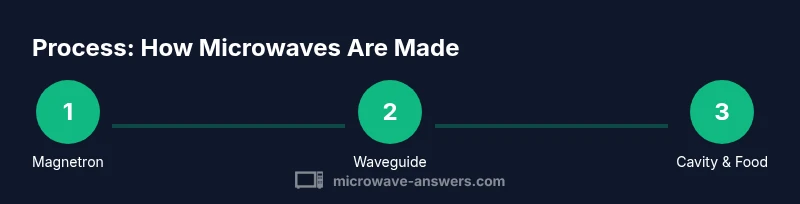
In a microwave oven, the microwaves are produced by a magnetron that converts electrical power into microwave radiation, typically around 2.45 GHz. Those waves travel through a waveguide into the cooking chamber, where they interact with water, fat, and sugar molecules. A rotating plate or stirrer helps distribute energy evenly, while shielding and interlocks prevent exposure to users.
How do microwaves make microwaves
According to Microwave Answers, the question 'how do microwaves make microwaves' centers on the magnetron's operation. In essence, electricity is transformed into high-frequency electromagnetic waves inside a sealed resonant cavity. A heated cathode emits electrons that interact with a magnetic field, producing microwaves around 2.45 GHz, the standard in household ovens. The energy exits through a sealed ceramic insulator into a waveguide, where the path is shaped and filtered before entering the cooking chamber. Once inside, the waves bounce off the metal walls, forming standing patterns that allow the waves to interact with the food. The key is that the magnetron does not emit static frequencies; it generates a stream of photons at a specific frequency, which is why the device can heat water molecules efficiently. Observing the process helps debunk myths that microwaves are dangerous or magical; the reality is that the device converts electrical energy into targeted microwave energy that heats food. This is how do microwaves make microwaves in a typical kitchen appliance.
The magnetron: heart of the oven
The magnetron sits at the core of the microwave's generation system. It uses a heated cathode and a strong magnetic field to produce oscillating electrons. As electrons travel around inside the resonant cavity, their rapid movements create microwave radiation at about 2.45 GHz. This frequency is chosen because it interacts effectively with polar molecules like water, fat, and sugars. The magnetron's output is not a single sharp tone but a small band of frequencies around the center; tolerances are kept small by careful engineering. Energy exits through a sealed ceramic insulator into a waveguide, where the path is shaped and filtered before entering the cooking cavity. Understanding the magnetron helps answer the question: how do microwaves make microwaves? Because without the magnetron's oscillation, there would be no microwave energy to heat food. In many models, several magnetrons might be used to increase power; however, the fundamental process remains the same: electric energy is converted to microwave energy by the magnetron.
How frequency and wavelength matter
Frequency and wavelength determine how deeply microwaves penetrate food and how energy is absorbed. The standard household microwave operates near 2.45 GHz, corresponding to a wavelength of roughly 12.2 centimeters in free space. When microwaves encounter food, the actual wavelength inside the material is altered by the food's dielectric properties, water content, and temperature. This change affects heating patterns: highly polar substances heat quickly; dry ingredients heat more slowly. The interplay between frequency and the food's composition is central to the efficiency of the cooking process, and it explains why some items heat unevenly. If you’ve asked how do microwaves make microwaves, the answer is that the frequency sets the energy scale; the material properties determine how that energy is converted into heat. Manufacturers optimize the waveguide and the cavity to maintain a stable frequency and uniform exposure across the plate.
Dielectric heating: how energy transfers to food
Dielectric heating occurs when an oscillating electric field causes polar molecules to rotate, generating friction and heat. Water is highly responsive to microwaves, but fats and sugars also participate, albeit differently. As the field cycles between positive and negative phases, dipoles try to align with each alternating field. The continual realignment creates microscopic motion and energy dissipation inside the food, which we perceive as heat. This mechanism explains why liquids heat quickly and why things with low water content may take longer. When we consider how do microwaves make microwaves, dielectric heating is the key step that translates energy from the magnetron into warmth inside the food. Microwave energy penetrates a few centimeters into most foods, with diffusion gradually distributing heat inward as cooking continues.
Waveguide and cavity design
From the magnetron, energy enters a waveguide, which is a metal duct that directs microwaves into the cooking chamber. The shape and length of the waveguide, along with the cavity's dimensions, influence how the waves bounce and interfere, creating patterns that can cause hot spots. The metal walls reflect microwaves, keeping them contained and guiding them toward the food rather than escaping into the room. The door features a metal mesh that blocks microwaves while allowing visibility, a fundamental safety feature required by regulators and trusted by homeowners. When the microwave is on, the energy is precisely channeled; when off, the shielding blocks leakage so that how do microwaves make microwaves remains a contained process inside the oven.
Turntable vs. stirrer: distributing energy
Most microwaves use a turntable to rotate the food, averaging out uneven heating by exposing different portions to the standing wave patterns. Some models add an internal stirrer or mode mixer to further randomize the field distribution. The goal is to minimize cold spots and overcooked edges while preserving efficiency. If you pause to reflect on how do microwaves make microwaves, the takeaway is that distribution mechanisms are as important as the magnetron itself: without movement, hot and cold zones would persist, making the cooking outcome inconsistent. Practical tip: place small items in a ring and larger items in the center to promote even heating; rotate halfway through cooking when your device lacks a turntable.
Safety systems and shielding
Microwave ovens are designed with multiple safety features. Interlock switches detect when the door is opened and immediately cut power to the magnetron, preventing exposure. The outer housing and internal shielding contain the microwaves, so only the intended cooking chamber processes energy. The oven's venting is designed to prevent pressure build-up and to minimize leakage. While the electromagnetic fields inside are intense during operation, the doors, gaskets, and seals ensure that any stray energy remains well below regulatory limits. According to Microwave Answers, these safeguards are essential for safe operation and must be maintained; a damaged door seal is a common reason many people worry about how do microwaves make microwaves escaping. Regular cleaning and inspection help keep the system reliable.
Common myths about microwaves
Many myths persist about microwave ovens. Some people believe microwaves produce radiation that makes foods radioactive; this is false: microwaves heat by energy transfer, not by changing the chemical nature of food. Others think microwaves cook food from the inside out; in reality, heating starts at the surface and works inward, depending on water content and dish geometry. Another misconception is that microwaves can cause cancer; there is no evidence to support that with normal use. When we address how do microwaves make microwaves, it helps to separate the science from sensationalism: the oven does not create new substances, it excites molecules with a controlled, non-ionizing field.
How to read microwave safety labels and specs
Look for electrical input power, frequency, and safety certifications on the control panel or user manual. The frequency is typically listed as around 2.45 GHz, a standard set by industry practice. Safety features such as interlocks, door seals, and shielding are highlighted in the manual. For consumers, understanding 'how do microwaves make microwaves' is not about technical detail but about confirming the device is certified, with minimal leakage and proper venting. If the appliance shows a damaged door gasket or unusual heat outside the oven, stop using it and consult service. Microwave Answers notes that following manufacturer recommendations protects both you and your family.
Practical demonstrations you can try at home
Demonstrations illustrate the principles behind how do microwaves make microwaves. Start with a cup of water to observe rapid temperature rise and watch the steam when heated. Place an avocado or a plate with damp paper towels in a safe container to compare heating distributions. Use a thermometer if available to measure temperature changes at different depths. Use the test to verify even heating, reposition items, and consider using power settings for variable results. Always supervise and never operate appliances with metal objects inside or while empty to avoid damage.
Troubleshooting heating unevenness
Uneven heating often results from item geometry, water content, or packaging. If you notice hot spots, rearrange items, divide large portions into smaller pieces, and use higher power for shorter bursts rather than long, continuous heating. Sometimes, letting food rest for a minute after heating helps redistribute heat through conduction. Carbon-based foods or dense fruits can heat differently; adjust cooking time accordingly. Regularly rotating items and using flat, shallow containers improves exposure. If you suspect a malfunction of the waveguide or magnetron, contact a qualified technician rather than attempting internal repairs.
Environmental and health considerations
Microwave ovens are designed to be energy-efficient appliances that minimize heat loss while cooking. Compared to conventional ovens, microwaves often use less energy for similar results, especially for small portions. The impact on health is generally minimal when used as directed, and the energy is contained within the enclosure. The Microwave Answers team emphasizes safe operation, proper maintenance, and responsible disposal at end-of-life. When used correctly, microwaves provide a practical cooking option that aligns with modern kitchen efficiency and safety standards.
Tools & Materials
- Microwave oven (for demonstration)(Ensure venting and door interlocks function; do not operate empty.)
- Microwave-safe cookware(Use ceramic or glass; avoid metal.)
- Non-metal measuring cups/spoons(For energy demonstration and experiments.)
- Infrared thermometer or heat-detection material(Optional for observing temperature variations.)
- Notebook or device for recording observations(Helpful for documenting results and tips.)
Steps
Estimated time: 60-90 minutes
- 1
Check safety interlocks
Verify the door is fully closed and the oven’s door latch activates the interlock switch. Power should be supplied only when the door is shut. This prevents any microwave energy from leaking while you prepare a demo or observe energy patterns.
Tip: If the door doesn’t latch properly, stop and have it inspected before use. - 2
Identify the magnetron and waveguide path
Locate the magnetron inside the oven (usually behind a panel) and trace the channel that carries microwaves into the cooking cavity. Understanding this path helps explain why energy follows a specific route rather than scattering in all directions.
Tip: Do not attempt internal access; follow the manufacturer’s service guidelines. - 3
Inspect cavity and shielding
Examine the interior walls for cleanliness and the door mesh for any damage. The shielding ensures energy stays in the cooking chamber even when food is present. Cleanliness prevents food crust from blocking energy flow.
Tip: Keep the surface dry and free of food residue to maintain consistent heating. - 4
Set appropriate power level and timer
Choose a sensible power level for demonstrations (e.g., medium) and use short bursts to observe heating increments. Short intervals prevent overheating of samples and allow rest periods for energy redistribution.
Tip: Avoid running at full power for delicate demonstrations to prevent overheat. - 5
Prepare a water-based test item
Place a cup of water in a microwave-safe container to observe a rapid rise in temperature once heating begins. This helps visualize dielectric heating in action.
Tip: Use a transparent container to easily observe steam lines. - 6
Add an additional test item
Introduce another item with different water content (e.g., a slice of bread) to compare heating rates and patterns. This shows how material properties affect how do microwaves make microwaves in practice.
Tip: Record time to a noticeable temperature rise for each item. - 7
Enable rotation or stirrer if available
If your model includes a turntable, ensure it’s functioning; if not, an internal stirrer or mode mixer can help distribute energy more evenly.
Tip: If the device lacks a distributor, manually rotate items halfway through cooking for better results. - 8
Check for hotspots and adjust placement
Observe any uneven heating by comparing the items’ appearance and temperature. If hotspots appear, rearrange items and consider smaller portions to promote uniform heating.
Tip: Avoid stacking items or using dense containers that block energy flow. - 9
Practice safe handling and cooling
Always use oven mitts and let items rest briefly after heating to let heat distribute via conduction. This reduces the risk of burns and promotes even energy dissipation.
Tip: Use a dry surface and avoid crowded trays that trap steam. - 10
Document your observations
Note the heating times, temperature changes, and any differences between items. This builds intuition about how do microwaves make microwaves in everyday use.
Tip: Compare results with the theoretical expectations from the magnetron-based explanation. - 11
Inspect maintenance and cleanliness
Regularly clean the door seal, vents, and interior. A damaged seal or clogged vent can alter energy containment and heating performance.
Tip: Address any wear promptly and never operate with damaged seals. - 12
Compare with safety guidelines
Review the manufacturer’s safety guidelines and local regulations. Keeping to these guidelines ensures energy is used responsibly and that how do microwaves make microwaves remains a safe, contained process.
Tip: If unsure, contact a qualified technician for a fast check.
Common Questions
What exactly are microwaves in a microwave oven?
Microwaves are electromagnetic waves generated by a magnetron inside the oven. They have a frequency around 2.45 GHz and heat food by exciting polar molecules, primarily water. This process is energy transfer, not radiation that makes food radioactive.
Microwaves are energy waves produced by the oven’s magnetron and heat food by exciting water molecules.
Are microwaves dangerous to use?
When used as intended with intact doors and shielding, microwaves do not pose a risk of harmful exposure. The appliance is designed to prevent energy from escaping and uses interlocks to cut power if the door opens.
Used properly, microwaves are safe because the shielding and door interlocks stop energy from escaping.
Why does food heat unevenly in a microwave?
Uneven heating results from how microwave energy interacts with food geometry and composition. Different parts may contain different water content or densities, causing hot and cold spots. Turntables and stirrers help even things out.
Hot spots happen because the waves create standing patterns; moving the food helps even heating.
Can microwave ovens leak radiation?
Modern microwaves are designed to minimize leakage with shielding and door seals. Regulators set strict limits, and a damaged oven should not be used until inspected.
Leakage is prevented by shielding; if you suspect a problem, stop using the oven and get it checked.
Can you cook with metal in the microwave?
Metal objects can reflect microwaves, causing arcing and damage. Always use microwave-safe containers and avoid metal in the cooking chamber.
Do not put metal in the microwave; it can cause sparks and damage.
How should I dispose of an old microwave?
Follow local e-waste disposal guidelines. If still functional, consider recycling programs that recover materials safely. Do not discard in regular trash where hazardous components may pose risks.
Check local programs for safe disposal of old microwaves.
Watch Video
Main Points
- Activate safety interlocks before any test.
- The magnetron converts electricity to microwave energy around 2.45 GHz.
- Waveguides and shielding keep energy inside the cooking chamber.
- Energy distribution depends on turntables, stirrers, and food geometry.
- Follow manufacturer guidelines; Microwave Answers emphasizes safe operation and proper maintenance.