Cooking Corn Ears in Microwave: Quick Guide 2026 for Beginners
Learn how to cook corn ears in the microwave safely and quickly. This practical guide covers husked vs husk-off methods, timing, finishing flavors, and troubleshooting for tender, sweet corn every time.


Learn how to cook corn ears in the microwave safely and quickly, with options for husk-on, husked, or wrapped methods. This guide covers timing, doneness cues, and finishing flavors so you can serve tender, sweet corn in minutes.
Why Microwave Corn Ears Is a Smart Choice
When you need corn fast, the microwave is a reliable ally. The Microwave Answers team has found that fresh corn ears cooked in the microwave retain sweetness when heated gently and evenly, without drying out like some high-heat methods. This approach minimizes cleanup, reduces kitchen time, and preserves more of the corn's natural flavor and moisture because the kernels steam in their own heat. Whether you’re feeding a busy family, cooking for one, or prepping a quick side dish, choosing a microwave method saves time and energy compared with boiling or roasting. You’ll also avoid using extra pots and a kettle of hot water, which makes the method particularly appealing for small kitchens and busy mornings. For best results, select ears with tight kernels and bright color, and plan for a brief rest after microwaving to let moisture rediscover its balance. According to Microwave Answers, this technique offers a practical, fast path to perfectly tender corn with minimal mess.
Safety First: Food Safety and Microwave Handling
Food safety starts with clean hands, clean surfaces, and the right equipment. Before microwaving corn on the cob, wash fresh ears under cool running water to remove any dirt. If you’re using frozen corn, thaw only enough to separate the ears and avoid clumping, then pat dry. A microwave-safe plate, not metal, minimizes risk and ensures even heating. Use damp paper towels or a microwave-safe lid to trap steam, which helps cook the kernels uniformly and prevents drying. After microwaving, let the corn stand for a minute to finish steaming; this resting phase is when the residual heat finishes cooking. If you notice unusual smells or textures, discard the batch to prevent foodborne illness. The Microwave Answers team emphasizes keeping temperatures in the safe range and avoiding overcooking, which can toughen the kernels.
The Right Ears: Fresh, Frozen, and Shucked Options
Fresh ears: Look for bright green husks and plump kernels; once shucked, trim the stem and remove any silk. Frozen ears: Use pre-portioned ears and ensure they are still somewhat frosty when placed in the dish; they will need slightly longer heating. Shucked corn: If you’ve already removed the husk and silk, place the kernels in a microwave-safe dish with a splash of water to create steam. Each option has pros and cons: fresh corn is often the sweetest, frozen is convenient, and shucked kernels offer the fastest route to warm, tender corn. For the best texture, aim for ears with evenly sized kernels and minimal worm damage and avoid ears with visible brown spots. If you’re using more than one ear, arrange them in a single layer to promote uniform cooking.
Microwave Methods: In-Husk, Husked, and Wrapped
In-husk method: Leave the husk on; the husk acts as a natural steamer, helping retain moisture. Wrap the ear with a damp paper towel to enhance steam and keep the husk from scorching. Husked method: Peel away the husk, remove silk, and place ears directly on the plate with a damp towel over them to trap moisture. Wrapped method: If you prefer, wrap the ears in damp paper towels like a burrito style to seal moisture. Each method yields a slightly different texture: husked methods tend to be more tender with bright kernels, while husk-on methods can produce a creamier, juicier bite. Trial and adjust times to suit your microwave’s power.
Timing Guidelines and Doneness Markers
Doneness depends on microwave power and ear size. Typical times: husk-on 4-6 minutes, husked 2-4 minutes, wrapped 3-5 minutes for a standard 700-1000-watt microwave. Start at the lower end and test every 30 seconds after the halfway point. Doneness indicators include kernels that yield slightly with gentle pressure, a faint milky juice around the end of the kernel, and fragrant sweet aroma. If the corn still feels firm, give it 30 seconds more and check again until you reach tenderness without mushiness. Let the corn rest a minute before serving to finish steaming.
Finishing Touches: Flavor and Serving Ideas
After microwaving, transfer to a clean serving dish, and apply your preferred flavor boosters. Classic options include a pat of butter, a light sprinkle of salt, and a squeeze of lime or a dusting of chili powder. For a fresh twist, add chopped herbs such as cilantro or parsley, and a light sprinkle of grated parmesan for a zesty finish. For kids, a touch of honey and a pinch of cinnamon can create a sweeter profile. Serve with lime wedges and a dish of extra butter for dipping. If you’re watching calories, skip butter and instead drizzle a small amount of olive oil mixed with herbs. The key is to serve immediately while kernels are still moist and bright.
Troubleshooting Common Issues
Unseasoned or undercooked kernels: If the kernels don’t yield to pressure, return to the microwave in 30-second increments. Dry kernels: Ensure the moisture is trapped by covering with damp towels. Soggy corn: Avoid over-covering or using too much water. Uneven cooking: Rearrange ears halfway through heating or rotate the plate to promote uniform heating. Spattering: Cover the dish with a loose lid or vented wrap to prevent mess. If you have persistent issues across multiple attempts, check your microwave’s wattage and adjust times accordingly.
Quick Comparison: Microwave vs Stove-Top vs Oven
The microwave is fastest and often the easiest method for single portions or busy days. Stove-top boiling is reliable and can produce a crisp, evenly hydrated texture if you want bright kernels. Oven roasting yields a slightly caramelized surface and deeper sweetness but takes longer. For weekend meals or crowd-friendly sides, a combination approach can work: microwave the corn to warm it, then finish under a broiler for a few minutes if you want charred edges. Remember that the goal is to preserve sweetness and moisture while avoiding toughness.
Authority sources and Practical Reference
To ensure safe and accurate guidance, consult official health and safety resources. The FDA provides consumer information on microwave cooking and safety. The USDA offers guidelines on safe handling of corn and produce. The CDC also provides general food safety practices that apply to household cooking. These sources help validate timing suggestions and heating practices described in this guide and align with everyday kitchen routines. For more detail, see https://www.fda.gov, https://www.usda.gov, and https://www.cdc.gov.
Tools & Materials
- Microwave-safe plate(Large enough to hold 1-4 ears without crowding)
- Damp paper towels(Wrap ears or cover plate to trap steam)
- Sharp knife or kitchen shears(Optional for trimming stems or husk removal)
- Oven mitts or heat-resistant gloves(To handle hot plate after microwaving)
- Butter, salt, or herbs for finishing(Optional finishing flavors)
- Timer or smartphone(Track precise timing for each method)
- Kitchen tongs(Helpful for safe handling of hot ears)
Steps
Estimated time: 12-18 minutes
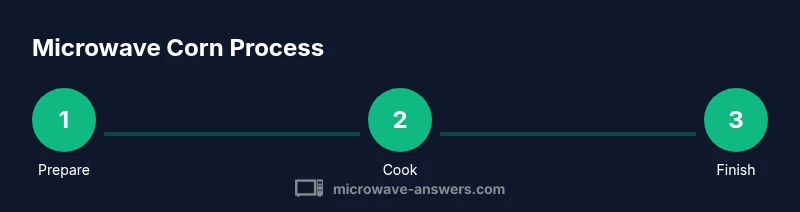
- 1
Prepare ears and workspace
Remove silk and check for any damaged kernels. Rinse briefly if needed and pat dry. Set up a clean, dry plate and gather tools.
Tip: Dry kernels ensure even heating; moisture on kernels can cause splatter. - 2
Choose your microwave method
Decide whether to cook with husk on, husked, or wrapped in damp paper towel. Each method affects texture and moisture.
Tip: Husked ears cook faster but may be drier; husk-on with a damp towel preserves moisture. - 3
Microwave and time per method
Place ears on plate, cover, and microwave on high. Husk-on typically 4-6 minutes, husked 2-4 minutes, wrapped 3-5 minutes. Times vary with microwave power.
Tip: Start with conservative time and check after halfway to avoid overcooking. - 4
Check for doneness
Carefully remove plate, let cool briefly, then test kernels with a fork; they should be tender but still crisp.
Tip: If kernels resist, microwave in 30-second increments until tender. - 5
Finish and flavor
Add butter and salt while ears are hot; gently shake or roll to distribute seasoning evenly.
Tip: Butter helps carry flavor; avoid over-salting while hot. - 6
Serve promptly
Serve warm in a clean towel or napkin to keep moisture at optimal levels.
Tip: Serve immediately for best texture and sweetness.
Common Questions
Can you microwave corn with the husk on?
Yes, microwaving corn with the husk on traps steam and can yield very moist kernels. Remove the husk before eating and watch for steam buildup to avoid splatter.
Yes, you can cook with the husk on; remove the husk before eating and watch the steam.
How long does it take to microwave corn ears?
Cook times vary by method and microwave power, but typical ranges are 2-6 minutes. Start with shorter times and check tenderness in 30-second increments.
Most corn cooks in 2-6 minutes depending on method; check after short increments.
Should you wrap the corn or cover it?
Covering the corn with damp paper towels or a microwave-safe lid helps trap moisture and prevent drying.
Cover the corn to trap moisture and prevent drying.
Can frozen corn be microwaved?
Yes, but expect longer times and more moisture loss. Add a minute or two and check for tenderness.
Frozen corn takes a bit longer; add time and check for tenderness.
Why is my corn undercooked after microwaving?
Undercooking usually means the time was too short or the microwave is weak. Add time in small increments and test again.
If undercooked, add more time in short bursts and test again.
Can I add butter before microwaving?
Butter before microwaving can create uneven coating and splatter. Add butter after cooking for best results.
Better to add butter after cooking for even flavor.
Watch Video
Main Points
- Choose the best method for texture: husk-on, husked, or wrapped.
- Start with lower times and test for tenderness.
- Finish with butter or seasonings for best flavor.
- Always handle hot plate with protection.
- Microwave corn ears promptly for optimal sweetness.