Can It Microwave? A Practical Guide for Home Cooks Today
Learn what can safely go in a microwave, how to test items, and practical safety tips from Microwave Answers. This comprehensive guide helps home cooks avoid hazards and heat efficiently.


Definition: 'can it microwave' asks whether an item is safe to heat in a microwave. It depends on material, moisture content, and labeling. This guide explains safe choices, common hazards, and quick checks to decide if something can be microwaved, with practical steps you can apply at home.
What does the question mean and why it matters
When a busy kitchen moment calls for speed, knowing whether an item can be microwaved is essential for safety and food quality. The phrase can it microwave is shorthand for two questions: is the material microwave-safe, and will heating in the microwave affect texture, flavor, or safety? According to Microwave Answers, the best first step is to check labeling and manufacturer guidance before you ever press start. If labeling is unclear, treat the item as potentially unsafe and look for a safer alternative. This approach protects you from arcing, melting, or chemical leaching while keeping meals on schedule.
Key factors that determine microwave compatibility
Several factors decide whether something can be microwaved safely:
- Material type: Glass and plain ceramics are generally safe; certain plastics are only safe if labeled microwave-safe; metals and metal decorations are usually a no.
- Moisture content: Foods with high moisture heat more uniformly; items with low moisture or dry coatings can heat unevenly or burn.
- Container design: Lids that seal completely can cause pressure build-up; vented lids are safer for reheating.
- Labeling and manufacturer guidance: The safest approach is to follow explicit labels and official instructions.
- Food safety considerations: Some containers can leach chemicals or warp at high heat, especially with fatty or acidic foods.
Understanding these factors helps you quickly decide whether to microwave, bake, or reheat an item using alternative methods.
Common items that almost always work in a microwave (with caveats)
Some items are reliably microwaved when labeled or designed for it:
- Microwave-safe glass and ceramic dishes without metallic decoration.
- Plain plastics clearly labeled as microwave-safe and free from cracks or clouding.
- Paper towels, parchment paper, and microwave-safe napkins used to cover food for moisture retention.
- Plain, uncoated ceramics and stoneware without lead-based glazes. Always verify the glaze is food-safe.
However, even these safe categories require basic checks: inspect the label, avoid damaged containers, and never heat plastics with cloudy seams or recycled content unless explicitly labeled as microwave-safe.
By understanding which materials usually perform well in a microwave, you can choose safer containers and reduce the risk of fire or chemical exposure.
Items that are risky or unsafe and why
Metal objects and metal trims should be kept out of the microwave. Metal reflects microwaves, causing arcing, sparks, and potential fires. Foil or metallic decorations on dishes can also arc. Some ceramic glazes may contain metals that heat unpredictably or release unwanted substances when heated. Avoid heating sealed containers, jars, or containers with tight lids, as pressure can build and explode.
Some plastics can be unsafe even if they feel sturdy. If a container is discolored, warped, or has crack lines, do not microwave it. Avoid heating foods in plastic wrap that isn’t labeled microwave-safe, as it can melt or release chemicals into the food. Also be mindful of microwaving eggs in shells or feeding infants with heated bottles that aren’t labeled for microwave use.
In short, stay away from items with metal, damaged plastics, or unknown labels. When in doubt, switch to a clearly labeled microwave-safe option or use a different heating method such as conventional oven or stovetop reheating.
How to test items safely without guessing
Testing should be methodical and minimal to minimize risk. Use a microwave-safe plate and a cup of water as a baseline:
- Step 1: Place the item you want to test on a microwave-safe plate. Place a cup of water next to it on the turntable.
- Step 2: Run the microwave on a short burst (30 seconds on high) and observe: does the item heat evenly? does any unusual scent develop? does the water heat normally?
- Step 3: If the item remains cool while the water heats, it may be safe to continue with cautious testing in shorter intervals. If the item becomes excessively hot or shows signs of melting or cracking, stop immediately.
- Step 4: Let the item cool briefly and inspect for any changes in texture or odor that might indicate leaching or degradation.
- Step 5: Based on observations and any labeling, decide whether to continue using the item in the microwave or opt for another heating method.
Tips to improve accuracy: ensure the microwave is clean, use fresh water for each test, and conduct tests with small quantities first. This approach mirrors professional testing in a safe, home-friendly way.
Practical reheating and safety practices
When reheating food, always aim for even heating and avoid overheating dry items. Use a vented cover to prevent splatters while keeping moisture in. Stir or rotate food halfway through reheating to help heat distribute evenly. Never heat food in sealed jars or containers; pressure can build and cause an explosion. For leftovers, consider stirring and letting the dish stand a minute before checking the internal temperature to ensure it reaches a safe level.
If you’re ever uncertain about a container or item, choose safer alternatives or reheat using a conventional oven or stovetop. This reduces the risk of chemical leaching or material failure under high heat. Finally, dispose of questionable containers responsibly—do not reuse damaged plastics for microwaving and replace any questionable cookware.
Authority references and further reading
For those seeking official guidance, consult these reputable sources:
- FDA: Microwave ovens and food safety — https://www.fda.gov
- USDA: Food safety and reheating guidance — https://www.usda.gov
- NIH: Food safety and microwave considerations — https://www.nih.gov
toolsMaterialsSectionLabelIntoBodyBlocksComment":"Tools and Materials are listed in the TOOLS-MATERIALS block, not in body blocks."],{
Tools & Materials
- Microwave-safe plate (ceramic or glass)(Use simple, non-metallic dinnerware labeled microwave-safe; avoid pieces with metallic glaze.)
- Kitchen timer(For timed tests and to manage short heating bursts without overexposure.)
- Tongs or oven mitts(Safely handle hot items after testing or heating.)
- Optional: cup of water(Used to run a quick baseline heat test alongside the item.)
- Ventilated microwave-safe lid or cover(Use to prevent splatter while allowing steam to escape)
Steps
Estimated time: 15-25 minutes
- 1
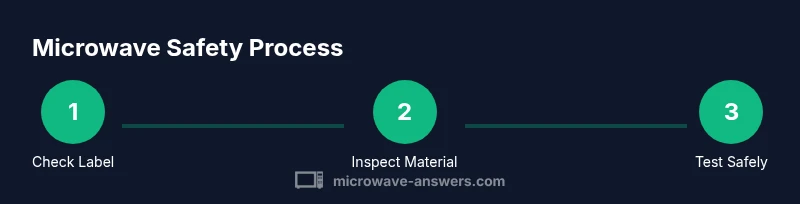
Check labeling and manufacturer guidance
Look for explicit microwave-safe labeling or the manufacturer’s heating instructions. If the item lacks guidance or you’re unsure, do not microwave it. When in doubt, choose a clearly labeled alternative.
Tip: If the label has worn edges or is unclear, treat the item as unsafe rather than risking a hazard. - 2
Inspect materials for metals and glaze hazards
Inspect for any metal parts, metallic trim, or glazes that might contain metals. Metal inside a microwave can arc and ignite. Even microwave-safe glass or ceramic can be unsafe if the glaze contains metal decoration.
Tip: A quick bend of the item can reveal a metal presence: if you hear a high-pitched tone or see sparks, stop. - 3
Test with a water baseline
Place the item on a microwave-safe plate with a cup of water beside it. Run 30 seconds on high. If the water heats normally and the item remains relatively cool, it may be safe to proceed in short bursts.
Tip: Always monitor the first test closely; stop immediately if the item heats unevenly or emits odd smells. - 4
Use vented covers and avoid sealed containers
Cover dishes with vented lids or microwave-safe wrap to retain moisture without sealing in steam. Do not microwave sealed jars or bottles to avoid pressure buildup.
Tip: Vent the cover slightly to allow steam to escape while preventing splatter. - 5
Make a go/no-go decision and document results
If tests show safe heating without unusual reactions, proceed with cautious reheating in short intervals. If there’s any doubt about safety, stop and choose another method.
Tip: Record the item and test outcomes for future quick reference.
Common Questions
Can metal be microwaved at all?
No. Metal can cause arcing, sparks, and fires. Keep metal utensils, foil, and metal-trimmed dishes out of the microwave.
Metal in a microwave can arc and start a fire, so it’s best to avoid it entirely.
Are plastics always unsafe in the microwave?
Not all plastics are unsafe. Only plastics labeled microwave-safe should be used. Avoid old, cracked, or discolored plastics that can warp or leach chemicals.
Only heat plastics that are clearly labeled microwave-safe, and replace damaged ones.
Can you microwave eggs in shells?
No. Eggs in shells can explode due to rapid steam buildup. Crack or beat eggs before microwaving, or use a conventional cooking method.
Never microwave eggs in shells; they can explode.
Why does microwave heating seem uneven?
Microwaves heat unevenly due to the way waves distribute energy. Stir food, rotate the dish, and let it stand after heating for more even temperatures.
Food heats unevenly because microwaves don’t always cover all areas equally.
What are safe reheating practices?
Reheat to steaming hot all the way through, use vented covers, and avoid overheating dry items. Let food stand a minute before checking the temperature.
Heat food evenly, use covers, and let it rest before serving.
Is microwave-safe labeling always reliable?
Labels are helpful, but rely on the manufacturer’s guidance and the item’s condition. If in doubt, err on the side of caution.
Labels help, but always trust your judgment and avoid questionable items.
Watch Video
Main Points
- Always check labeling before microwaving.
- Avoid metals and damaged plastics.
- Use microwave-safe containers only.
- Test new items with a water baseline in short bursts.
- When in doubt, skip microwaving and choose safer methods.