What Causes Microwave Rust Inside
Discover what causes rust inside microwaves, how to diagnose it, safe cleaning steps, and when to replace. Practical guidance from Microwave Answers for home cooks and homeowners.


Rust inside a microwave is usually caused by damaged enamel, moisture buildup, or corrosion from salt and acidic foods. Start by unplugging, inspecting the cavity for rust spots, and cleaning with a gentle paste. If rust is extensive or under the enamel, stop using the microwave and call a professional.
What rust looks like inside a microwave
Rust in a microwave typically appears as orange to brown patches on the interior enamel or metal surfaces. You may notice speckles near the door edges, around the turntable, or along seams where moisture collects. Rust can be a sign that the enamel coating has chipped or worn away, exposing bare metal to moisture and air. While a small, isolated spot might be surface staining, spreading rust over a larger area can indicate deeper enamel damage and ongoing corrosion. If you see rust, treat it seriously because it can signal compromised protection that should not be ignored in a high humidity kitchen.
Why rust develops inside microwaves
Microwave cavities are lined with enamel or metal coated with protective finishes. When that protective layer is damaged, or when moisture lingers after cooking, rust can form. Steam from hot foods, splashes of salty or acidic sauces, and repeated exposure to water increase the chance of corrosion. Abrasive cleaning or harsh cleaners can scratch the coating, creating more vulnerable spots. Rust does not arise from the microwave’s electrical function itself, but from the exposed metal reacting with moisture and air over time.
How moisture and condensation contribute
Steam rising during heating carries moisture that condenses on the cavity walls. In a small space with limited ventilation, this moisture can accumulate and interact with any chipped enamel or tiny scratches. Persistent condensation is a key driver of rust, especially if the area is near the door gasket or hinge where moisture can pool. Reducing excess moisture after use and wiping dry can help slow progression, but significant rust usually means the enamel is compromised and needs professional assessment.
The role of enamel coating and its limits
Many microwaves use enamel coatings to protect the metal cavity. Enamel wears down from daily use, particularly with aggressive scrubbing pads or abrasive cleaners. Once the enamel is compromised, even normal moisture can start to corrode exposed metal. Unfortunately, enamel repair is not a simple home fix; restoration often requires specialized coating or replacement of the cavity lining. If rust sits on bare metal or near structural seams, replacement is typically the safer option.
Safe cleaning and immediate steps
First, unplug the microwave and ensure your hands are dry before touching the device. Gently wipe the interior with a soft sponge and a paste made from baking soda and water to lift surface rust without scratching. Rinse with a damp cloth and dry thoroughly. Avoid metal scrubbers, bleach, ammonia, or acidic cleaners that can worsen the coating. Do not run the microwave empty to “dry it out” as this can damage the magnetron. If you see rust spreading or peeling enamel, stop using the unit and seek professional advice.
When to call a professional
If rust appears near the door gasket, on the hinges, or along seams where moisture may seep in, it is prudent to contact a technician. Extensive rust or rust beneath the enamel indicates the protective layer has failed, and a professional assessment is needed to determine whether repair is feasible or if replacement is the safer option. A pro can confirm whether the interior coating can be resealed or if the appliance must be retired.
Prevention tips to keep rust away
Keep the interior dry after cooking by wiping away moisture and spills promptly. Use soft cleaning tools and avoid abrasive pads that scratch enamel. Store the unit in a dry area to minimize humidity exposure, and check the door gasket periodically for damage. Treat splashes quickly, especially with salty sauces or acidic marinades, to prevent chemical attack on the enamel. Regular maintenance checks can catch early signs of wear before rust becomes visible.
Quick home checks you can perform now
Start by unplugging the unit. Inspect for visible chips or flaking on the enamel, especially near the door and around the turntable mounting. Look for any damp residue or dark stains that indicate lingering moisture. Gently probe for any rough patches with a non-metallic tool—if you feel roughness, stop and consult a professional. Document rust spots with photos to show a technician, if needed.
Debunking myths about microwave rust
Some people think rust only happens in older models. In reality, rust can affect any microwave that has enamel damage and ongoing moisture exposure. Another myth is that rust is only cosmetic; while small surface rust may be reduced, it can continue to corrode and compromise the metal. Finally, there is a belief that you can simply repaint the interior at home; enamel repair generally requires professional coating or part replacement due to safety concerns.
Steps
Estimated time: 60-90 minutes
- 1
Power off and unplug the microwave
Begin by unplugging the unit and ensuring the surface around it is dry. This protects you from electric shock while you inspect. If the plug or cord shows damage, do not use the appliance until inspected by a professional.
Tip: Always dry your hands before handling the appliance. - 2
Inspect for enamel chips and rust extent
Look inside for visible rust patches and examine the enamel for chips or flaking. Document any areas that show rust spreading or corrosion around the door seal. This helps determine whether the issue is superficial or structural.
Tip: Take clear photos from multiple angles for reference. - 3
Gentle rust treatment and drying
Make a paste from baking soda and water and apply it to the rust spots with a soft, non-metallic sponge. Gently rub to lift surface rust, then wipe away residue and dry the cavity completely. Ensure no moisture remains before reassembly.
Tip: Never use metal scrubbers or harsh chemicals on enamel. - 4
Assess moisture control and gasket condition
Check the door gasket and edges for signs of wear or moisture accumulation. If the gasket is damaged, moisture can repeatedly enter the cavity and promote rust. Replace damaged parts before further use.
Tip: A professional can correctly reseal or replace the gasket. - 5
Decide on repair vs replacement
If rust remains after cleaning or is severe around seams, consider the cost and safety implications. Repairs to enamel are often not durable; replacement may be the safer choice.
Tip: Keep receipts and take note of warranty coverage. - 6
Schedule professional assessment if needed
If rust is widespread or you are unsure about the extent, arrange a service call. A technician can confirm if interior coating can be restored or if cabinet replacement is required.
Tip: Do not delay professional help if you notice electrical smell or sparking.
Diagnosis: Interior rust appears on enamel or metal surfaces inside microwave
Possible Causes
- highDamaged enamel coating exposing bare metal
- highChronic moisture from steam and condensation
- mediumSalt or acidic food residues corroding surface
- mediumMoisture ingress due to door seal wear
- lowCleaning with abrasive pads or harsh cleaners
Fixes
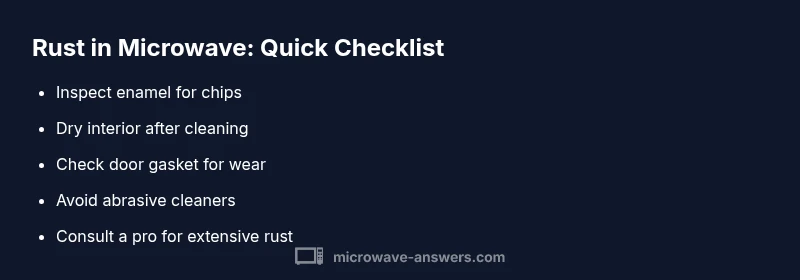
- easyInspect enamel for chips or flaking; stop using if damage is extensive
- easyClean rust spots with a baking soda paste and non-abrasive sponge; dry thoroughly
- easyEnsure interior is completely dry after cleaning; avoid running the microwave while wet
- mediumCheck door gasket and seams; replace damaged parts if moisture ingress is suspected
- hardConsult a professional if rust is beneath enamel or widespread; replacement may be necessary
Common Questions
Is rust inside a microwave dangerous?
Rust inside a microwave signals enamel damage and corrosion; while rust itself is not a foodborne hazard, it can spread and compromise the appliance. Do not continue using a unit with visible rust, especially near seams or the door gasket, and seek professional help.
Rust inside a microwave signals enamel damage. Don’t use it until a professional checks it.
Can I fix rust inside a microwave myself?
Minor surface rust on an intact enamel surface can sometimes be reduced with a baking soda paste and careful cleaning. However, enamel damage that exposes bare metal usually requires professional coating or replacement. Proceed with caution.
Minor rust might be cleaned, but damaged enamel usually needs a pro.
What causes rust to form inside a microwave?
Rust forms when moisture condenses on metal surfaces and the enamel coating is damaged. Salt and acidic residues from foods accelerate corrosion, especially where water can pool or leak through seams.
Moisture and damaged enamel cause rust to form inside.
Should I replace my microwave if I see rust?
If rust is widespread or located along seams and near the door gasket, replacement is usually the safest option. Minor surface rust may be managed, but ongoing corrosion can affect safety and performance.
Widespread rust often means replacement is safer.
How can I prevent rust from coming back?
Keep the interior dry after use, clean spills promptly, and avoid abrasive cleaners. Regularly inspect the enamel for chips and replace damaged gaskets to limit moisture ingress.
Dry after use and inspect enamel to prevent rust.
Is rust more likely in older models?
Rust can occur in any model if enamel is damaged and moisture exposure is ongoing. Age increases the chance of wear, but the key factor is enamel integrity and moisture control, not age alone.
Rust can happen in any model if enamel is damaged.
Watch Video
Main Points
- Inspect enamel for chips before using after cleaning.
- Dry interior thoroughly to slow rust progression.
- Consider professional help for extensive rust or enamel damage.
- Prevent rust with gentle cleaning and moisture control.