How to Get Rid of Microwave Smell: Simple Odor Fixes
Learn practical, safe steps to remove lingering microwave odors. This guide covers baking soda deodorizing, steam cleaning with lemon, interior wipes, and maintenance to keep your microwave smelling fresh.


This guide helps you learn how to get rid microwave smell using safe, kitchen-friendly methods like steam cleaning, baking soda deodorizing, and thorough interior wipe-downs. By following these steps, you’ll remove lingering odors and prevent them from returning, keeping your microwave smelling fresh for everyday use. This quick answer supports safe deodorization and reduces odor transfer to foods.
Why odors form in microwaves
If you’re wondering how to get rid microwave smell, it often starts with tiny food residues stuck on the interior walls, grease buildup, and absorbent turntables. According to Microwave Answers, odors intensify when steam can’t circulate or when ventilation is poor. Spilled sauces, sugary syrups, and strong spices can seep into seals and vents, making the scent linger even after cooking. Over time, these residues trap odors and transfer them to new foods being heated. Understanding the sources helps you target the right cleaning strategy, rather than chasing the smell with harsh cleaners. In many homes, the simplest fix is a careful wipe-down followed by a short steam treatment using items you already own. Adopting the right approach also reduces odor transfer and keeps your microwave ready for everyday use.
Common odor sources include:
- Food splatters on walls and door gasket
- Stubborn sauces that cling to the turntable or rack
- Residual steam carrying fragrant compounds into seals
- Absorbed smells in porous accessories like turntables or plastics
Once you identify the source, you can tailor your deodorizing method to the specific odor, avoiding over-cleaning that can damage finishes or affect food safety. The goal is to refresh the interior without introducing new scents or chemicals. This section lays the groundwork for practical, low-risk techniques you can perform in under an hour.
Safe, proven odor-removal methods
Removing microwave odors doesn’t require exotic tools or strong chemicals. The safest and most effective methods rely on basic kitchen items and standard cleaning practices. One of the simplest approaches is baking soda: it neutralizes many odors and is gentle on surfaces when used in a paste. Start by mixing baking soda with a little water to form a thick paste, then apply it to any stubborn spots inside the cavity. Let it sit for 5–10 minutes before wiping away with a damp cloth. For a broader deodorizing effect, steam clean the interior using lemon or vinegar.
A popular method is to pour water into a microwave-safe bowl and add a few lemon slices or a splash of white vinegar. Heat on high until the mixture boils and the room fills with aroma, then let the steam loosen embedded residues for several minutes. Afterward, wipe the interior with a clean cloth and rinse with fresh water. If you prefer a more neutral aroma, simply microwave a bowl of water for 1–2 minutes and wipe down. Remember to ventilate the kitchen during and after cleaning to speed odor dissipation. For persistent smells, repeat the process 1–2 times. These techniques work well for most households and rely on everyday products you already own. Microwave Answers analysis shows that simple steps are effective for most odors.
In addition to cleaning, consider maintenance habits that prevent odor buildup:
- Wipe the interior after each use, especially after reheating strong-smelling foods
- Clean the turntable and rack weekly
- Keep the door gasket free of debris to prevent trapped odors
- Ventilate by running the fan/vent while heating foods or leaving the door ajar briefly after use These practices help keep odors from returning and improve overall appliance cleanliness.
Common mistakes to avoid and extra tips
Avoid using bleach, ammonia, or other harsh chemicals inside the microwave. They can leave residual fumes that may transfer to foods or react with the microwave’s components. Never operate the microwave while it’s dry or empty during odor treatment; water is essential for steam cleaning and can help protect the interior coatings. If you notice persistent smells that won’t budge after repeated cleaning, inspect for mold in corners or seal areas, which may require professional service. For a quick freshening up between deep cleans, try placing a small bowl of unused coffee grounds or dried orange peels inside (not vented) overnight; these can absorb residual odors, though they won’t replace a thorough wipe-down and steam session.
To prevent future odors, establish a simple routine: after heating, wipe the interior, wipe the door gasket, and let the cavity dry with the door open for a few minutes. This habit, combined with the methods above, reduces odor-causing buildup and keeps your microwave pleasant-smelling.
Verdict and maintenance: Microwave Answers’ practical guidance
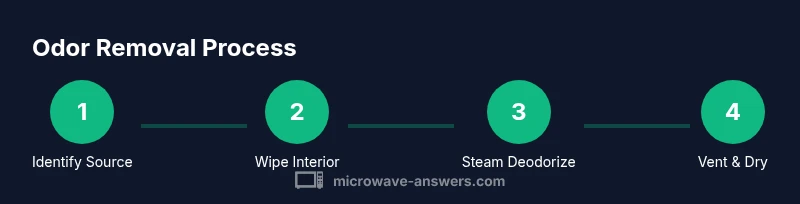
The Microwave Answers team recommends a practical odor-removal workflow focused on cleaning, deodorizing, and routine maintenance. Start with a thorough wipe-down, then execute a steam deodorizing cycle using lemon or vinegar, and finish with a fresh wipe and air-out. By incorporating these steps into a regular cleaning routine, you minimize odor recurrence and extend the life of your appliance. Consistency beats intensity when it comes to odor management, and the most effective results come from combining cleaning with a preventative routine.
Tools & Materials
- Mild dish soap(For interior wipe-downs and exterior surfaces)
- Warm water(Needed for washing and rinsing)
- Baking soda(Makes a deodorizing paste)
- Microwave-safe bowl(For steam cleaning with water + lemon/vinegar)
- Lemon slices or white vinegar(Optional for steam deodorizing)
- Soft sponge or microfiber cloth(Gentle cleaning without scratching)
Steps
Estimated time: Estimated total time: 30-45 minutes
- 1
Remove accessories
Take out the glass turntable and any racks; set them aside for separate washing to ensure all surfaces are accessible for cleaning.
Tip: Soaking the turntable separately helps loosen stuck residues. - 2
Wipe the interior
Mix a drop of dish soap with warm water. Wipe the walls, ceiling, and door gasket to remove visible grime.
Tip: Use a damp, not soaking, cloth to avoid oversaturating electrical components. - 3
Prepare steam deodorizer
Fill the microwave-safe bowl with water and add lemon slices or a splash of vinegar. This creates a gentle, fragrant steam.
Tip: Leaning toward lemon for a fresh scent; vinegar provides strong deodorizing power. - 4
Steam clean
Heat on high for 2–3 minutes until steam vents from the cavity. The steam loosens residues on the interior surfaces.
Tip: If you see boiling overflow, stop and wait for steam to subside before opening. - 5
Wipe after steaming
Carefully remove the bowl and wipe the interior again with a clean cloth to remove loosened residue.
Tip: Dry thoroughly to prevent moisture pockets that can harbor smells. - 6
Clean the gasket and exterior
Gasket and door edges can trap odors; wipe these areas and dry them. Clean the exterior with a mild soap solution.
Tip: Don’t scrub aggressively on the gasket; just wash away debris. - 7
Reassemble and air out
Replace turntable and racks. Leave the door ajar for 5–10 minutes to air out before use.
Tip: A short air-out period helps evaporation complete without rushing the process. - 8
Test odor and maintain
Heat a small plate of water for 30 seconds and sniff the cavity; if odors remain, repeat steps 3–5 one more time.
Tip: Establish a weekly wipe-down to prevent buildup.
Common Questions
Can I use bleach or ammonia to deodorize a microwave?
No. Bleach and ammonia can release harmful fumes when heated and may damage the microwave’s interior. Use mild cleaners, baking soda, or steam deodorizing methods instead.
No, avoid bleach or ammonia inside the microwave. Use baking soda, steam with lemon or vinegar, and a damp wipe instead.
Is it safe to run a microwave empty to remove smells?
Running the microwave empty with no water can damage the magnetron and is not recommended. Always use a water-based steam method for deodorizing.
Do not run it empty. Use water with lemon or vinegar for safe deodorizing.
How long does steam deodorizing take?
Typically 2–3 minutes of heating for steam, followed by a wipe-down. Repeat if odors persist.
Steam usually takes a couple of minutes, then wipe and check again.
Will odors come from the vents or door seals after cleaning?
Yes, odors can linger in the door gasket and vents. Clean these areas thoroughly and ventilate to remove residual smells.
Odors can hide in the seals; clean them well and air out.
How often should I clean to prevent odors?
Do a quick wipe after heavy odor foods, and perform a full steam clean monthly or when odors reappear.
Keep a monthly routine to stay ahead of smells.
Can I use essential oils to deodorize?
Essential oils can leave strong residues and aren't recommended for routine deodorizing inside the microwave. Stick to steam and baking soda for safety.
Avoid essential oils inside the microwave; use steam and baking soda instead.
Watch Video
Main Points
- Start with a thorough interior wipe to remove surface residues.
- Steam with lemon or vinegar to lift embedded odors.
- Wipe dry and vent to finish odor removal.
- Maintain a simple cleaning routine to prevent odor buildup.
- Avoid harsh chemicals that may produce dangerous fumes.