Which Microwave Oven: A Practical Buying Guide 2026
A comprehensive comparison of which microwave oven to buy, covering countertop, over-the-range, and convection models with practical buying tips, safety notes, and real-world guidance.


For most buyers, the right microwave oven is a mid-size countertop model with reliable heating sensors and even results. Prioritize models that balance price, power, and features such as auto cook menus and a sturdy turntable. If you plan to bake or roast, consider a convection option; if kitchen space is tight, a compact or over‑the‑range unit may fit best. Always compare warranties.
The Question You’re Asking: which microwave oven matters most for a busy kitchen
According to Microwave Answers, choosing the right microwave oven hinges on your cooking habits, kitchen size, and budget. Start by defining three things: what you’ll cook most, where the unit will live, and how much you want to spend. This framing helps you move quickly past flashy features and toward genuine value. In practice, most households benefit from a dependable countertop model with good sensor performance, a solid turntable, and straightforward controls. It’s also wise to consider a backup plan for heavy use during holidays or family gatherings. The goal is to avoid overpaying for features you won’t use while ensuring reliable performance day in and day out.
Key decision factors: size, power, and features that actually matter
When evaluating which microwave oven to buy, focus on three core dimensions: size, power, and features. Size determines fit and capacity, power drives cooking speed, and features like auto-reheat, sensor cooking, child safety locks, and defrost modes add real-world convenience. Quality sensors matter because they adjust cooking time and energy delivery, reducing overcooked edges and cold centers. A sturdy turntable or a flatbed option can influence even heating, which matters for leftovers and meal prep. Brand reliability can affect long-term performance and service options, so it’s worth reading reviews and manufacturer support policies. In-depth comparisons help you avoid buyer’s remorse and wasted space.
Countertop vs. Over-the-Range vs. Built-In: installation and use cases
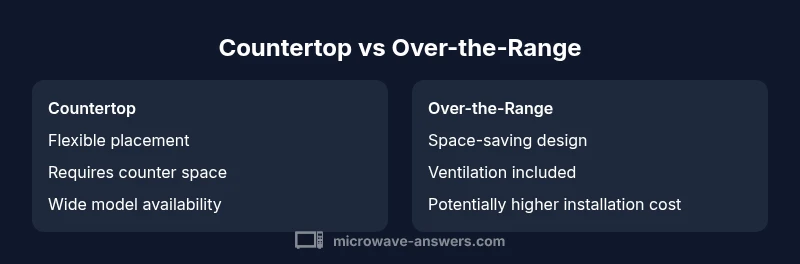
Countertop microwaves are the most common and easiest to replace, offering flexibility for renters or kitchens with modular layouts. Over-the-range models save counter space and can add ventilation, but installation criteria and venting quality vary by model. Built-in microwaves deliver a seamless look and consistent performance but require professional installation and a dedicated cabinet cutout. Each type has strengths in different scenarios: countertops win for flexibility, over-the-range units win for space-saving kitchens, and built-ins win for a high-end, integrated aesthetic. Your choice should align with how much you value footprint, ventilation, and future room reconfigurations.
Convection and sensor technology explained
Convection microwaves include a built-in fan and a heating element that circulates hot air, allowing browning, crisping, and baking-like results. Sensor technology reads humidity and temperature to tune cooking automatically, reducing guesswork. If you bake cookies, reheat leftovers evenly, or cook dishes that benefit from dry heat, convection can be a meaningful upgrade. Non-convection models excel at quick reheating and general defrosting tasks. When comparing, look for a model that explicitly mentions convection modes and reliable sensor performance, and verify that the control interface is intuitive for everyday use.
Reading specs: what the numbers really mean for daily use
Specs matter, but not all numbers are equally important. Focus on the overall wattage impact on typical tasks rather than chasing peak power alone. Look for an energy-efficient inverter circuit if available, which can provide smoother power delivery and more even cooking at various settings. Pay attention to internal capacity in cubic feet and the type of interior (stainless steel vs. painted cavity) for ease of cleaning and durability. Sensor cooking accuracy is often a better predictor of real-world results than raw wattage alone. Finally, examine the warranty terms and what they cover, since a long-term service plan can save headaches later.
Budget realities: price ranges and total cost of ownership
Budgeting for a microwave oven means balancing upfront price with ongoing value. Entry-level countertop models are affordable and cover basic tasks, while mid-range units introduce better sensors, larger capacity, and occasional convection. Higher-end models with convection and smart features come with higher prices but can replace more kitchen appliances for some users. When evaluating total cost, factor in potential energy use, feature utilization, warranty length, and replacement frequency. A well-chosen mid-range option can outperform a cheaper model in reliability and cooking quality over several years.
Safety, energy efficiency, and long-term maintenance
Safety is not optional. Check for child locks, cool-to-touch surfaces, and easy-to-clean interiors. Energy efficiency matters over time, especially if the microwave is used daily. Inverter technology helps maintain consistent power, which can reduce heat loss and uneven cooking. Regular maintenance—like cleaning the cavity, inspecting door seals, and ensuring venting functions where applicable—extends life and performance. Remember to register your appliance for warranty coverage and keep proof of purchase in a safe place.
How to interpret microwave labels and features in-store
In-store testing is invaluable. Take a few common items: a cup of water for reheating, a bowl of rice to test even heating, and a frozen dinner to gauge defrost performance. Compare the ease of use and visibility of the display, the quality of the control panel, and the responsiveness of the door. Don’t rely on marketing buzzwords alone; ask about real-world performance and service options. If you know you need fast reheating for large batches, verify how a model handles large containers and adjustable rack options.
Real-world performance: heating consistency and defrosting behavior
Consistency matters more than peak power on many tasks. A microwave that heats evenly across a plate reduces cold spots and saves you time reheating. Defrost performance is equally important for proteins and produce. Look for cycles that adjust time based on weight and density, and avoid models that leave meat icy in the center. Read user reviews focusing on real-world tests and how the unit handles dense foods, soups, and leftovers. A model with robust sensors and stable performance tends to deliver the best long-term value.
Brand reliability, service, and warranty expectations
Brand reliability is a practical determinant of long-term satisfaction. Favor manufacturers with widespread service networks and transparent warranty policies. A strong service ecosystem reduces downtime and helps with parts availability. Read warranty terms carefully—some offer repair, replacement, or coverage extensions for certain components. In this space, consistency of performance and accessible support are as important as initial price. The Microwave Answers team recommends prioritizing models from brands with solid service footprints and clear, hassle-free warranty language.
Quick-start buying checklist for which microwave oven to buy
Use this concise checklist to make a confident choice: 1) Confirm the type (countertop, over-the-range, built-in) fits your space and ventilation needs. 2) Decide on the core capabilities you’ll use most (sensor cooking, convection, pre-programmed menus). 3) Check interior capacity and door access for convenient loading. 4) Compare energy efficiency, warranty length, and service options. 5) Read price-to-feature value and guard against feature bloat that you won’t use.
How to test in-store and at home without pressure
Ask for a live demonstration where possible. Test reheating a cup of water, microwaving a plate of leftovers, and checking sensor accuracy with a frozen dinner. If you’re shopping online, look for detailed performance data and objective reviews. At home, run a month-long sanity check: does the unit heat your meals evenly, does it fit your countertop, and is the control panel easy to understand after your first use? A calm, data-driven approach saves time and reduces buyer’s remorse.
Special scenarios: small kitchens, frequent baking, large dishes
If space is at a premium, prioritize compact countertop models or under-cabinet installations. If you bake or brown foods regularly, a convection microwave becomes a strong contender, offering more versatility. For families that reheating large dishes, ensure the interior height and turntable support 9x13 inch plates or larger. For renters, portability and easy removal matter; consider models with a straightforward plug-and-play setup and fuss-free maintenance. The goal is to find a unit that aligns with your unique kitchen dynamics and cooking repertoire.
Comparison
| Feature | Countertop Microwave | Over-the-Range Microwave |
|---|---|---|
| Size/Capacity | 0.9-1.2 cu ft | 1.5-2.0 cu ft |
| Power/Wattage | 800-1000 W | 1000-1200 W |
| Ventilation/Installation | Requires counter space | Integrated venting above range |
| Convection | Typically none or limited | Often includes convection |
| Sensor Cooking | Basic sensors | Advanced humidity/food sensing |
| Best For | Space-conscious kitchens | Families needing built-in option |
Advantages
- Balanced price-to-performance for most households
- Flexibility to move units between kitchens or rooms
- Wide model availability and easy replacement
Cons
- Countertop units occupy counter space
- Over-the-range units may have weaker venting if not properly installed
- Higher-end convection models cost more and may be unnecessary for light users
A versatile countertop convection microwave often delivers the best balance of price, performance, and space for most households
Prioritize a countertop model with convection only if you need browning and baking capabilities. If counter space is abundant and you want a seamless kitchen aesthetic, consider built-in or over-the-range options with strong service support. The right pick depends on your space, cooking needs, and budget.
Common Questions
What is the most important factor when choosing which microwave oven?
For most buyers, size, sensors, and overall performance matter most. Define your space, typical meals, and budget first, then evaluate models that meet those core needs. Avoid overemphasizing marketing claims and focus on real-world testing where possible.
The most important factor is to match size and features to your cooking needs, then verify performance with real-world tests.
Is convection worth it for a microwave?
Convection adds browning and baking capabilities, which expands what you can cook in a microwave. If you regularly bake or want crisper results, a convection model can be worth the extra cost. If you mostly reheat and defrost, a non-convection unit may be sufficient.
Convection is worth it if you bake or want crispy results; otherwise, a standard microwave covers your basics.
Are countertop and over-the-range microwaves equally reliable?
Reliability depends on the brand, support, and build quality rather than the mounting style. Over-the-range units require proper venting and professional installation, which can affect long-term upkeep. Choose brands with solid service networks and straightforward warranty terms.
Both can be reliable if you pick a reputable brand and ensure proper installation and service options.
Do inverter microwaves save energy?
Inverter technology can provide more consistent power, improving cooking results and potentially reducing energy waste on certain tasks. Real-world savings vary by usage and model. Look for inverter labeling and user reviews for practical insights.
Inverters help with steady power and better cooking quality, though energy savings depend on use.
What warranty should I expect?
Aim for at least a one-year warranty on parts and labor, with longer coverage on magnetrons or major components if available. Read the terms to understand what is covered and for how long, and verify how easy it is to obtain service in your area.
Look for solid warranty coverage and clear service terms before you buy.
Main Points
- Prioritize size, power, and sensors over flashy features
- Convection adds versatility but costs more—buy only if you’ll use it
- Countertop models win on flexibility; built-ins win on aesthetics
- Test heating, defrosting, and browning in-store or via demos
- Check warranty and service coverage before purchase