Where to Buy a Microwave in 2026: A Practical Buying Guide
Discover where to buy a microwave in 2026 across big-box stores, online marketplaces, and refurbished options. Learn what to compare, how delivery and warranties work, and which channels suit your kitchen and budget.


You can buy microwaves from big-box retailers, appliance stores, online marketplaces, and second-hand shops. Compare models by wattage, size, and features; check warranties and delivery options. For the widest selection and best prices, start with major retailers online and in-store, then explore manufacturer-direct or refurbished units. Always verify energy ratings and safety certifications.
Overview of Buying Channels
When you think about where to buy a microwave, you have several reliable channels: traditional big-box retailers and department stores, dedicated appliance retailers, online marketplaces, and manufacturer-direct or brand stores. Each channel has its own strengths. Big-box and appliance stores let you see the unit in person, compare sizes side-by-side, and get immediate answers from staff. Online marketplaces offer the widest selection, competitive pricing, and convenient delivery options, but you may need to rely on product pages and reviews to gauge features. Manufacturer-direct stores can provide the latest models and clearer warranty terms, while refurbished or open-box listings often deliver strong value if you verify the seller’s reputation and return policy. Always verify the model’s energy rating, safety certifications, and warranty terms before purchase. The Microwave Answers team emphasizes shopping across channels to maximize choice and value. In 2026, the landscape favors flexibility and clear policy details.
Price Ranges and Value
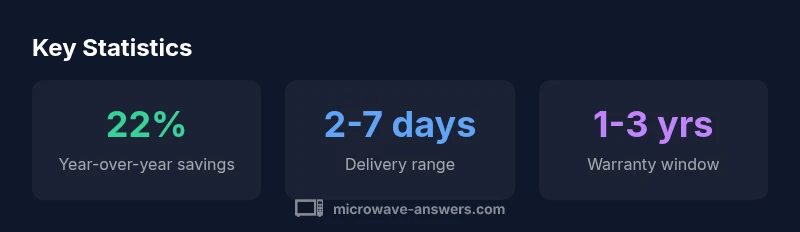
Price is a cornerstone of any microwave purchase, but it should be considered alongside size, wattage, and features. Countertop models generally range from compact to large, with wattage commonly spanning 700 to 1200 watts. Higher-wattage units heat more evenly and quickly, which matters for busy kitchens and frozen meals. Open-box and refurbished options can offer substantial savings, but you should confirm that the unit includes a valid warranty and has undergone a basic safety check. When evaluating price, compare total cost of ownership: delivery charges, installation needs, potential energy efficiency credits, and any extended warranty plans. Across channels, you’ll notice that the widest price swings occur during sales events, so timing your purchase can yield meaningful savings. The Microwave Answers analysis shows that prudent buyers often save 10–25% by shopping during holiday promotions or end-of-quarter clearance events.
What to Compare: Specs that Matter
Beyond price, the most important specs determine how well a microwave fits your needs. Core specs include wattage (heat speed and performance), interior capacity (cu ft or liters), turntable vs. flat-surface cooking, preset cooking programs, sensor cook features, and weight. Energy efficiency and standby power can also affect long-term costs. If you cook for a family, a higher wattage and larger interior will help reduce wait times; for single-household use, smaller, compact units may be perfect. When evaluating online listings, read the product description carefully to confirm the exact interior dimensions and whether the turntable can be removed for cleaning. Brand reputation and warranty terms should accompany any decision to ensure reliability over time.
Size, Wattage, and Footprint
The footprint of your microwave depends on where you plan to place it and how you use it. Countertop models are straightforward but require enough clearance for ventilation and door swing. Over-the-range microwaves save counter space but demand proper ventilation and installation clearance. Wattage affects cooking speed and evenness; common choices span 800–1200 watts, with higher wattage preferable for larger households or frequent users. If you’re limited on counter space, consider compact models under 1.0 cu ft. In any case, verify the exterior dimensions, interior cavity size, and door clearance to ensure the unit fits your kitchen configuration. Always check the installation guidelines if you’re upgrading from a microwave to a convection model or planning to mount it above a range.
New vs Refurbished: Pros and Cons
New microwaves come with full warranties and the assurance of factory freshness, but can carry higher sticker prices. Refurbished or open-box units often deliver significant savings, but buyer due diligence is essential. Ensure you purchase from reputable sellers, request full disclosure of any cosmetic or functional issues, and confirm that the unit has undergone safety testing and includes a valid warranty. Open-box items are commonly available through manufacturer-direct outlets and major retailers. If you opt for refurbished units, verify that they include original parts and a warranty period that meets your expectations. The time you save buying used must be weighed against the risk of unseen wear or reduced efficiency.
Warranties, Returns, and Delivery
A strong warranty is a key safeguard when buying a microwave. Look for at least a one-year warranty on parts and labor, with longer coverage for major components like the magnetron. Delivery options vary by seller and location; many online retailers offer white-glove delivery or in-home installation, while in-store purchases can provide instant pickup and immediate testing. Return policies are equally important; favor sellers with clear, reasonable return windows and no-hidden restocking fees. If you’re buying online from a marketplace, check the seller rating and whether the warranty is offered by the manufacturer or the seller. For peace of mind, align your choice with channels that provide transparent terms and reliable customer support scaffolding.
Safety Certifications and Authenticity
Before you finalize a purchase, verify that the microwave carries recognized safety certifications (UL, CE, or equivalent) and energy efficiency labels (Energy Star where applicable). Authenticity and safety are non-negotiable, especially for households with children or pets. Check that the model number matches the listing, and review retailer verification notes for refurbished or open-box products. Be cautious of deeply discounted models that have unclear provenance or missing documentation. Microwave Answers emphasizes prioritizing safety-certification-bearing units from reputable vendors. If you’re unsure about a listing, contact customer support for explicit verification and request original packaging or manuals when possible.
Smart Features and Modern Conveniences
Smart or sensor-based features can simplify cooking, from popcorn and sensor reheat to auto-defrost for meat and vegetables. Evaluate whether these features add real value in your kitchen, or if they risk overcomplication. Compatibility with other devices or ecosystems (e.g., voice assistants) can be a bonus but is not essential. If you prefer straightforward operation, focus on reliable core functions, easy-to-clean interiors, and consistent heat distribution. In 2026, many top models balance practical everyday use with optional smart features, but never sacrifice core reliability for gimmicks. The key is to choose a model whose most-used features reliably perform every day.
Buying Guide by Household Type
Small apartments or studio homes require compact footprints and efficient energy use; countertop units with 0.7–1.0 cu ft capacity often fit best. Families may prioritize larger interior cavity, higher wattage, and robust safety features for busy mornings and quick weeknight meals. If you cook frequently from frozen meals, prioritize even heating and quick-defrost capabilities. For those with limited counter space, over-the-range or built-in models can keep counters clear but require professional installation and ventilation planning. Finally, consider budget and long-term costs by weighing price against warranty depth and energy efficiency. This targeted approach helps you select a microwave that complements your kitchen style, supports your routines, and stays reliable for years.
Comparison of buying channels for microwaves
| Channel | Pros | Cons |
|---|---|---|
| Big-box / Appliance Stores | Wide selection; immediate testing | Can be crowded; stock varies |
| Online Marketplaces | Convenient; wide range; easy returns | Delivery times vary; need product confirmation |
| Manufacturer Direct / Brand Stores | Latest models; clear warranties | Often higher prices; limited stock |
Common Questions
Where is the best place to buy a microwave in 2026?
The best place depends on your priorities: testing in-store, fast shipping, or value on refurbished units. A mix of big-box, online retailers, and manufacturer-direct options is usually optimal, with careful attention to warranty terms and safety certifications.
Choose a mix of in-store testing and online options to balance price, selection, and warranties.
Online vs in-store: which should I choose?
Online shopping offers convenience and broader selection, but in-store allows hands-on testing and immediate returns. For the best outcome, compare a few models online and, if possible, test two top picks in-store.
Shop online for selection; test in-store for feel and actual size.
Are refurbished microwaves safe to buy?
Yes, if purchased from reputable sellers with documented safety checks and a valid warranty. Read seller terms carefully and confirm that essential components have been tested and replaced if needed.
Buy refurbished only from trusted sellers with warranties.
What warranty should I expect on a microwave?
Aim for at least a one-year warranty covering parts and labor. Longer coverage on magnetrons or major components is a plus, especially for high-use households.
Look for at least a one-year warranty on core parts.
What size and wattage do I need for a small kitchen?
In tight spaces, a compact unit with 700–900 watts and interior capacity around 0.7–1.0 cubic feet is usually sufficient. Ensure it fits countertop space and door clearance.
For small kitchens, pick compact wattage and fit on your counter.
“"The Microwave Answers team believes the smartest purchases come from comparing several channels and insisting on clear warranty terms. The right fit balances performance with long-term reliability."”
Main Points
- Shop across channels to maximize selection and value
- Prioritize wattage, size, and warranties in every model
- Verify safety certifications and energy efficiency before purchase
- Consider new vs refurbished based on warranty and risk tolerance