Microwave or Range Hood: Which Kitchen Upgrade Wins?
A balanced, practical comparison of microwave vs range hood options, covering function, installation, ventilation, maintenance, and when to choose each for smarter kitchen upgrades in real homes.


Microwave or Range Hood: neither is universally better; the right choice hinges on your cooking style and kitchen layout. If you prize speed, defrosting, and space-saving convenience, a microwave is essential. If you cook heavily on the stove and need effective ventilation, prioritize a range hood. In many kitchens, a combination is the optimal solution.
The Core Decision: Microwave vs Range Hood
According to Microwave Answers, the kitchen upgrade decision often boils down to two indispensable roles: heating convenience and air quality control. The question is commonly framed as microwave or range hood, but the real choice is about prioritizing function over form. If speed, defrosting flexibility, and compact placement top your list, a microwave delivers quick meals with minimal footprint. If you regularly cook on the stove and want to reduce smoke, steam, and lingering odors, a dedicated range hood provides tangible benefits for air quality and comfort. The Microwave Answers team emphasizes that many homes benefit from both devices, whether installed separately or as part of an integrated setup with venting. In this article, we unpack functional differences, space considerations, and decision criteria you can apply to reach a practical, real-world outcome.
Functional Differences: What Each Appliance Does
A microwave excels at accelerating meal preparation, defrosting frozen foods, reheating leftovers, and enabling quick snacks without heating the entire kitchen. A range hood, by contrast, focuses on air management: removing smoke, steam, and cooking odors and helping control humidity. Some kitchens opt for a microwave with a built-in vent, but even then the hood remains the primary tool for air quality during high-heat cooking. In short, microwave capabilities center on food heating, while a range hood concentrates on environmental comfort. This fundamental split defines how each appliance fits into your daily routines and long-term kitchen design.
Installation and Space Considerations
Space planning drives the decision between compact versus built-in solutions. A countertop microwave or a drawer-style unit may slide into slim gaps, requiring only a standard electrical outlet. A built-in microwave must align with cabinet openings and can share space with a wall oven, adding to cabinetry costs but saving counter space. Range hoods demand clear space above the cooktop and typically require ducting to exhaust air to the exterior, though recirculating models exist for apartments or retrofit projects. Proper sizing matters: width should match your cooktop or the hood’s capture area, and height clearance above the cooking surface influences performance and accessibility. In sum, installation complexity and space constraints often tip the balance toward one solution—or a thoughtful blend of both.
Ventilation, Air Quality, and Safety Implications
Air quality is a central factor in this decision. A range hood provides direct removal of heat, smoke, and odors, helping reduce humidity and improving comfort in the kitchen. Microwaves, even with venting options, typically do not move air with the same capacity, so they cannot replace a hood for heavy cooking. If you do a lot of frying or high-sauté cooking, a hood with sufficient airflow is essential. Safety considerations include proper duct sealing, avoiding backdrafts, and ensuring venting directions do not create drafts that impact other appliances. This is where design choices intersect with building codes and long-term maintenance considerations. Microwave Answers analysis shows that venting strategy and duct layout significantly influence real-world performance in diverse homes.
Use Case Scenarios: Small Kitchen, Busy Home, Entertaining
In compact kitchens, space efficiency can dictate the winner. A compact microwave with a slim profile can free counter and cabinet space, while a small hood or recirculating model can handle everyday cooking needs. For households that cook heavily, a robust range hood becomes a safer, more reliable option, especially when paired with a microwave in a dedicated zone. Entertaining guests or handling multiple dishes at once benefits from appliances that minimize kitchen heat buildup and odors. The right mix balances convenience and environmental comfort, ensuring you don’t compromise ventilation when you need airflow the most.
Noise, Maintenance, and Longevity
No appliance operates in a vacuum. Noise levels, especially at higher fan speeds, can influence daily use and dining comfort. Maintenance is also a practical consideration: microwaves require periodic interior cleaning and vent cleaning if equipped; range hoods demand filter maintenance and occasional duct cleanouts. A well-maintained hood keeps performance up and energy use down, while a clean microwave reduces inefficiency and odor carryover. When selecting models, consider ease of access for cleaning, the availability of replacement filters, and the durability of doors, seals, and touch controls. A thoughtful choice reduces long-term annoyances and expense.
Cost of Ownership and Value
Cost considerations for microwave and range hood revolve around upfront price, installation complexity, and ongoing maintenance. While a basic microwave can be affordable and space-saving, a feature-rich hood with high airflow and quiet operation may require professional installation and ducting. You’ll also weigh maintenance frequency and filter replacement against the expected lifespan of each unit. Although the two appliances serve different primary purposes, choosing high-quality, properly sized models can lower total cost of ownership by reducing the need for frequent replacements and by preserving kitchen comfort and resale value over time.
Smart Features and Integration
Today’s microwaves often include sensor-cook functions, multi-stage cooking, and optional smart connectivity for remote monitoring. Range hoods may offer smart controls, variable speed fans, and auto-delay shutoff, especially in premium models. When considering smart features, focus on reliability, ease of use, and compatibility with existing kitchen devices. A smart hood can be programmatically linked to your cooktop usage and ventilation needs, while a smart microwave can be controlled via voice or a mobile app. The value lies in intuitive, dependable operation rather than a parade of features with limited real-world impact.
Final Recommendation Scenarios
The short answer remains nuanced: the best choice depends on your kitchen size, cooking habits, and lifestyle. If your priority is quick meals and counter space efficiency, a microwave is indispensable. If you regularly cook on the stove and value air quality, a high-performance range hood is essential. For many homes, a combined approach—microwave plus hood—offers the strongest overall utility. The exact pairing should be guided by kitchen layout, number of occupants, and how much you value ventilation versus speed.
Potential Combos and Built-In Options
Modern kitchens increasingly feature integrated solutions that blend cooking and ventilation. Built-in microwaves can be paired with compact range hoods to maximize cabinet space while maintaining performance. There are also micro-hood combos designed to fit slim or open-plan kitchens, though these options require careful ducting planning. When evaluating combos, ensure they are sized for your cooktop width, consider duct routing, and confirm that the system meets local codes. A well-planned built-in solution can streamline installation and improve aesthetics without sacrificing functionality.
Common Pitfalls and How to Avoid Them
Avoid underestimating the importance of ducting and clearance: poor venting undermines both performance and safety. Don’t assume a cheaper unit will deliver the same results in a real kitchen—appliance layout, duct routing, and room volume matter. Also, neglecting maintenance can degrade performance quickly; set a simple cleaning schedule for filters and vents to extend lifespan. Finally, don’t neglect future needs: a small kitchen today may become cramped if you later expand cooking activities. Planning ahead reduces the risk of costly retrofits.
Comparison
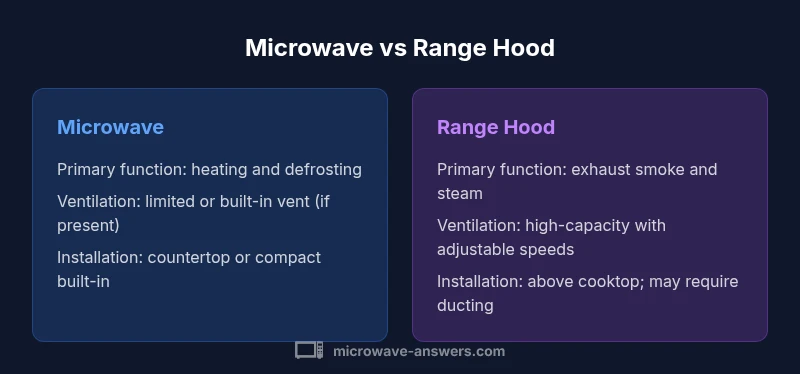
| Feature | Microwave | Range Hood |
|---|---|---|
| Primary function | Heating/defrosting and quick meals | Ventilation for smoke, steam, and odors |
| Ventilation capability | Limited or built-in venting (if present) | Dedicated high-capacity ventilation with adjustable speeds |
| Space and installation | Countertop or compact built-in; minimal space | Above-cooktop installation; may require ducting |
| Maintenance | Interior cleaning; occasional vent cleaning | Filter cleaning; duct maintenance as needed |
| Noise level | Moderate to low (model dependent) | Moderate to high (fan speed and ducting impact) |
| Best use scenario | Small meals, space-constrained kitchens | Active cooking with strong ventilation needs |
| Cost and installation considerations | Typically lower upfront and easier to install | Often higher due to ducting, professional installation |
Advantages
- Saves counter space with compact form factors
- Microwave adds quick reheating and defrosting, boosting kitchen efficiency
- Range hood improves air quality and reduces grease buildup
- Both can be integrated in compact kitchens to maximize utility
- Wide range of models supports different budgets and layouts
Cons
- Microwave cannot fully replace the venting function of a hood
- Range hood requires proper ducting and can be noisy at high speeds
- Combos may limit flexibility in very small or DIY kitchens
A blended approach often offers the best overall utility
Prioritize a range hood if heavy stovetop cooking is common; add a microwave for quick meals and space savings. In small kitchens, look for compact, integrated options that combine both functions without sacrificing ventilation.
Common Questions
What is the main difference between a microwave and a range hood?
A microwave primarily heats and defrosts food, while a range hood vents smoke, steam, and odors from the stovetop. They serve distinct roles in kitchen performance and comfort.
Microwave heats food quickly, and a range hood ventilates cooking byproducts. They address different needs in the kitchen.
Can a microwave replace a range hood in a small kitchen?
Not fully. While some microwaves offer venting, they typically cannot match the airflow and odor control provided by a dedicated range hood for regular stovetop cooking.
A microwave can’t fully replace a hood, even in small spaces.
Is a built-in microwave with a vent a good compromise for small kitchens?
A built-in microwave with vent can save space and provide some ventilation, but verify venting efficiency and duct routing. Performance varies by model and installation.
A built-in vented microwave can help, but check venting efficiency before buying.
What features should I look for in a range hood?
Look for adequate airflow (CFM), compatibility with ducting or recirculation, accessible filters, and a reasonable noise level. Width should match your cooktop for optimal capture.
Focus on airflow, ducting options, and noise when choosing a hood.
How do I measure if my space supports a range hood?
Measure the cooktop width, the clearance above it, and the available ducting path to the exterior. If ducting isn’t possible, choose a recirculating hood and consider filtration requirements.
Check width, clearance, and duct path to determine feasibility.
Are there safety considerations when using a microwave near a range hood?
Avoid placing the microwave where heat or steam from cooking is excessive; ensure vent placement does not interfere with microwave operation and follow manufacturer guidelines for both devices.
Keep them in sensible proximity and follow the manuals for safe operation.
Main Points
- Assess kitchen size to decide between countertop vs built-in options
- Prioritize ventilation when you cook with high heat regularly
- Choose microwave for speed and versatility; hood for air quality
- Consider combined solutions for small spaces to maximize utility
- Plan for maintenance to preserve performance and longevity