Microwave 21 Inches Wide: Buying Guide, Specs, and Installation Tips
A practical buying guide focused on microwaves that are 21 inches wide, covering fit, features, watts, installation, and price ranges for home kitchens.


A microwave 21 inches wide denotes an exterior width around 21 inches, a compact option that fits many kitchens. Exact measurements vary by model (often 21.0–21.5 inches), so always check the product specs. When shopping, verify cabinet clearance and ventilation to ensure reliable performance.
Understanding the 21-inch width
The term microwave 21 inches wide refers to the exterior footprint, not to what you can fit inside. Exterior width is the primary factor that determines whether a model slides into a particular cabinet, sits on the counter with sufficient side clearance, or can be mounted beneath a cabinet. In practice, coverage across brands shows a small tolerance: many models labeled as 21 inches wide measure roughly 21.0 to 21.5 inches from edge to edge. That half inch matters for ventilation and trim. Manufacturers may include front trim kits or slightly different tolerances, so always read the spec sheet and verify the actual measurement before purchasing. Also note that depth, height, and door swing interact with space planning. A narrow width helps with footprint, but you may sacrifice interior volume or premium features; weigh your priorities accordingly and measure the actual space you will use.
According to Microwave Answers, space-efficient widths like 21 inches play a key role in kitchen design by enabling flexible placements under cabinets or on compact countertops. The surrounding cabinet or wall cutouts should account for clearance on both sides and behind the unit to prevent heat buildup. In this context, the 21-inch width becomes a practical constraint rather than a goal in itself; the ultimate choice should balance fit with performance and features.
Width in context: 21-inch models vs other common sizes
When you compare 21-inch-wide microwaves against other common widths, you gain a clearer picture of space planning. An 18–19 inch compact model typically sits neatly in narrow gaps but offers a smaller interior cavity and fewer feature options. A 24-inch model, by contrast, often corresponds with larger interior volume and more robust features, including higher wattage and sometimes built-in ventilation options. The 21-inch class sits between these two extremes, offering a compromise of footprint and practicality. If your kitchen has a standard 22–23 inch cabinet opening, a 21-inch model is frequently a safe match, but confirm your exact cabinet dimensions and ensure you won’t rely on trim or partial mounting to achieve a proper seal. Always check height and depth as well, since a model that is narrow in width may be taller or deeper than you expect, affecting clearance above the unit and inside surrounding cabinets.
From a design perspective, a 21-inch width can help maintain a cohesive look in a row of stainless appliances, minimizing visual bulk while still delivering essential microwaving power. However, the tradeoff is sometimes interior capacity and the availability of higher-end features at this width. In practical terms, if you primarily need quick reheats and sensor cooking in a small kitchen, a 21-inch microwave can be an excellent choice; if you regularly cook large meals or require premium convection functionality, you may prefer a wider model for extra cavity space and flexibility.
How to measure your space for a 21-inch microwave
To determine if a 21-inch-wide microwave will fit your kitchen, start with a precise set of measurements:
- Width: Measure the opening or counter space, from edge to edge, at the top, middle, and bottom to catch any splay or bow. Note the smallest measurement and confirm the model’s listed exterior width.
- Height: Check both the available vertical clearance and any obstruction from cabinets or shelves above the unit. Include a clearance buffer for heat and ventilation.
- Depth: Account for the countertop or cabinet depth, plus any protruding trim or feet. Don’t assume a model sits flush with the front edge of the counter without confirming depth and cord length.
- Door swing: For built-in or under-cabinet installations, ensure the door can open without hitting a backsplash or cabinet face. If it’s a freestanding countertop unit, ensure there’s room for the door to fully extend.
- Ventilation: Most microwaves require some space on the sides and rear for airflow. If you plan to install under a cabinet, confirm there’s adequate venting, either passive or active, depending on the model.
- Electrical: Confirm the outlet location and circuit capacity. A 15-amp or 20-amp circuit is typical for many household microwaves, but check the model’s power requirements and your kitchen wiring.
A methodical measurement routine reduces the risk of buying a unit that won’t fit or function properly in practice. When in doubt, bring a tape measure to the store or consult the manufacturer’s specification sheet for precise exterior dimensions and ventilation requirements. As you size the space, remember that 21 inches is a label for exterior width, not a guarantee of interior volume or feature set.
Features you’ll see in a 21-inch model
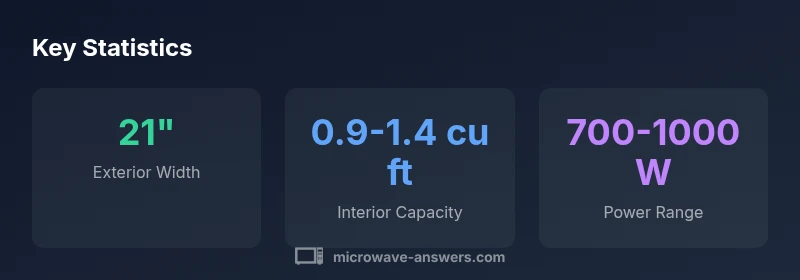
Compact 21-inch microwaves often strike a balance between footprint and capability. Look for a power rating in a practical range for quick reheats and even browning, typically around 700 to 1000 watts. Interior volume commonly falls in a practical bracket, often around 0.9 to 1.4 cubic feet, which translates to roughly a modestly sized turntable and rack options. Sensor cooking, auto-defrost, and pre-programmed presets help with everyday tasks, while some models include convection capabilities for light baking and crisping. Turntables or flatbed designs influence how evenly heat is distributed and what types of cookware you can use. If you rely on large casserole dishes, verify that the turning surface and interior height accommodate them. The presence of a convection mode—while not universal—can significantly expand what you can prepare in a compact unit, especially if you are accustomed to using a full-size oven for roasting and baking. As always, match wattage and interior size to your typical cooking loads and kitchen workflow; width alone should not drive the decision.
Installation and placement considerations
Deciding where to place a 21-inch microwave requires attention to ventilation, electrical supply, and user ergonomics. Countertop models need a level, non-slip surface with clearance around the sides for airflow. If you place the unit under a cabinet or within a smaller cabinet opening, verify that there is adequate space between the top of the unit and the bottom of the cabinet to avoid heat buildup. Built-in or over-the-range installation typically demands external venting or a dedicated exhaust pathway and a secure mounting kit. Electrical requirements should be matched to the device’s power draw, and you may need a dedicated outlet or a dedicated circuit depending on your kitchen layout. When planning installation, consider cable management and potential exposure to heat from nearby stoves. Proper placement reduces noise, heat exposure to surrounding cabinetry, and the risk of triggering overheating shutdowns. Finally, reserve room for routine maintenance and easy access for cleaning the exterior and the door seals, which is essential for preserving performance over time.
Buying strategies and price expectations for 21-inch models
Pricing for 21-inch microwaves varies with brand, features, and build quality. Expect a wide range, from basic models designed for everyday reheating to more feature-rich units that include convection, higher wattage, and sensor technology. While many compact models sit in the lower-to-mid price tier, premium 21-inch units with convection, smart features, or robust metal finishes can command higher prices. When evaluating value, compare interior volume, wattage, and included accessories (like a two-tier rack or crisper tray) in addition to exterior width. Warranty length and service availability are also important indicators of long-term value. If your budget is tight, focus on essential features (reliable reheating, even heating, basic sensors) and confirm that the unit will fit your space without forcing compromises on ventilation or electrical compatibility. Consumer reviews can provide practical insight into real-world performance and reliability, helping you choose a model that offers the best balance of size, power, and value over time.
Common myths and misperceptions about 21-inch microwaves
There are common myths about width that can mislead buyers. One misconception is that a narrower exterior width automatically means less interior volume; in reality, interior capacity is determined by the interior design and rack layout, which can vary widely even among models with the same exterior width. Another misconception is that all 21-inch microwaves offer the same performance; wattage, turntable design, and convection capability can drastically alter cooking outcomes. Finally, some buyers assume that a smaller width restricts your options to standard reheating, ignoring models that bring advanced features such as inverter technology, smart sensors, and compact convection. By looking beyond the width alone and evaluating key specs—power, interior size, ventilation, and additional features—you can select a unit that truly fits your cooking style and space constraints.
Maintenance and care for a 21-inch microwave
Regular maintenance extends the life of a compact microwave. Wipe the exterior and door seals with a damp cloth to remove fingerprints and spills, and inspect the gasket for wear every few months. Clean the interior periodically to prevent residue buildup, and run a short water/steam cleaning cycle if your model offers it. Check the turntable drive and roller ring for wear and replace as needed to maintain even heating. Ensure the ventilation openings remain unobstructed and free of dust; a quick vacuum or brush can help keep airflow clear. Avoid using metal cookware unless recommended by the manufacturer, and never operate the unit when empty. Finally, schedule professional service if you notice unusual noises, excessive heat buildup, or inconsistent heating, as these can indicate failing components that affect performance and safety.
Comparison of width categories and key specs for common microwave sizes
| Model Type | Exterior Width | Interior Capacity (cu ft) | Convection | Typical Price Range |
|---|---|---|---|---|
| 21-inch countertop model | 21 inches | 0.9-1.1 | Yes | $180-$400 |
| 24-inch countertop model | 24 inches | 1.0-1.6 | Sometimes | $250-$600 |
| 18-19 inch compact model | 18-19 inches | 0.75-1.0 | Often | $120-$350 |
Common Questions
Is a 21-inch width standard for microwaves?
Width standards vary; 21 inches is common for compact models but not universal. Always check exact exterior width.
There are many sizes out there, but 21 inches is a common compact width to look for.
Will a 21-inch microwave fit in a 22-inch-wide cabinet?
A 21-inch-wide unit can fit in a 22-inch cabinet with proper ventilation; verify door clearance and trim.
Likely yes, but measure precisely to be sure.
Do 21-inch microwaves include convection?
Some models include convection, but not all; check product specs.
Some do, but not all.
Besides width, what should I consider?
Wattage, interior volume, turntable, sensor features, and ventilation requirements.
Look at wattage and features, not just width.
Are built-in options available in the 21-inch class?
There are built-in and over-the-range variants in many widths; ensure proper venting and electrical.
Yes, but check installation needs.
“When space is tight, a 21-inch-wide microwave can be a practical compromise between footprint and performance, provided you prioritize ventilation, wattage, and feature set.”
Main Points
- Confirm exact exterior width from model specs before buying
- A 21-inch-wide microwave is a compact option with limited interior volume
- Verify cabinet clearance and ventilation are adequate for safe operation
- Prioritize wattage and features (convection, sensor cooking) alongside width