GE Microwave Over the Range: A Practical Guide
A practical, data-driven guide to GE microwave over the range—sizing, venting, installation, safety, and maintenance for home cooks.


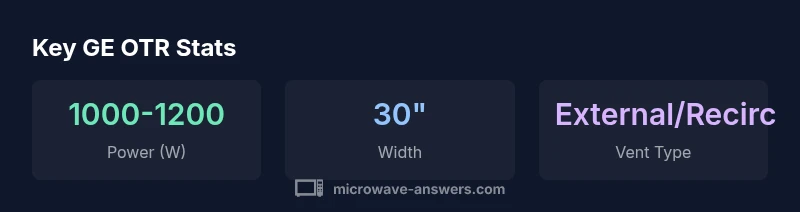
Most GE microwave over the range models are 30 inches wide and operate at 1000-1200 watts, delivering reliable cooking in a compact, space-saving package. They offer venting options for exterior ducting or recirculation, and feature sensors, lighting, and basic convection on select models. This guide covers buying, installation, safety, and maintenance for GE OTR units.
Overview of GE microwave over the range
GE microwave over the range is designed to integrate cooking and ventilation in a single footprint, freeing up precious counter space in busy kitchens. When you need a compact, dependable solution for daily meals, GE’s line of over-the-range (OTR) models is a common choice for home cooks and homeowners. According to Microwave Answers, GE OTR models emphasize practical design, straightforward installation, and dependable performance that fits standard 30-inch-wide cabinet layouts. The phrase ge microwave over the range describes the family of 30-inch models that sit above the stove and vent steam and cooking odors either through external ducting or via recirculation back into the kitchen. These units typically combine microwave capability with hood-like ventilation, making them a practical all-in-one appliance for smaller kitchens.
The value of an OTR model hinges on how well it balances three goals: convenient cooking, effective ventilation, and simple installation. For many kitchens, a standard GE OTR provides reliable microwave performance, adequate lighting for your cooktop, and a ventilation option that reduces smoke and steam. If you prioritize intuitive controls, sensor cooking, and predictable results, a GE OTR often checks those boxes without the need for a separate range hood.
The Microwave Answers team notes that buyers should consider cabinet alignment, duct layout, and electrical readiness as integral parts of the decision. A well-matched GE OTR aligns with the existing cabinet work, vents appropriately for your space, and can be installed with minimal wiring changes when you follow manufacturer guidelines.
Key specifications to know before you buy
In choosing a GE microwave over the range, pay attention to a few core specifications that affect fit, performance, and daily use. First is the standard width: many GE OTRs are designed for a 30-inch opening, which aligns with common kitchen cabinetry. Power output typically ranges from 1000 to 1200 watts, providing quick heating for leftovers and rapid boiling for beverages. Venting options vary by model, with some units offering external venting for more effective exhaust and others offering non-ducted recirculation for easier installation in spaces without a duct path. Convection-capable models exist in the GE lineup, delivering a slower, more even bake that can replace a small countertop oven in some setups. Lighting and display quality matter too; bright interior lighting helps you monitor food, while simple, intuitive controls reduce the learning curve for every family member.
From a safety and durability standpoint, check the door seal, hinge quality, and interior coating. A robust gasket helps minimize heat loss and keeps steam away from cabinetry. Sensor cooking features should correlate with your typical meals—popcorn, frozen entrées, and reheating tasks. If you want a model that pairs with smart-home ecosystems, verify compatibility before purchase. Finally, assess the warranty scope and service network in your region, since GE products are supported by a broad network of technicians and parts.
Installation considerations and venting options
Installing a GE microwave over the range requires careful planning around space, venting, and power. Start by measuring the cabinet opening and the space above your stove to ensure clearance for a comfortable fit and safe operation. Electrical readiness is essential: most GE OTR units require a dedicated 120V circuit with adequate amperage, so evaluate your kitchen’s electrical panel capacity before committing. Venting path is equally critical; choose between external venting that exhausts air outside the home or recirculation (non-ducted) which filters air through a charcoal or mesh filter. The vent path should be as short and straight as possible to maximize exhaust efficiency. Mounting height is typically guided by the manufacturer’s recommendations and your own comfort; many installers place the unit so the bottom edge sits at a practical viewing level for most adults, while avoiding impeding the cooktop beneath. If you lack a straight duct or the space above your stove makes venting difficult, a recirculating GE OTR option can provide a feasible alternative with proper filtration.
Practical steps to avoid common installation pitfalls include: confirming a sturdy cabinet support structure, ensuring the weight of the GE OTR is supported by wall studs or a dedicated mounting plate, and securing the electrical outlet within reach of the unit’s power cord. Always refer to the specific model’s installation manual for mounting screws, venting adapters, and electrical grounding requirements. For complex layouts, hiring a professional installer can prevent mistakes that affect performance and safety.
Safety, energy efficiency, and ventilation best practices
Safety and efficiency should drive every GE OTR decision. Ensure that the installation maintains adequate clearance around the unit to prevent heat buildup, and use microwave-safe cookware to minimize splatter and lingering odors. Regularly inspect the vent and filters; a clogged vent can reduce exhaust performance and contribute to heat buildup. If you have a recirculating setup, replace or clean filters per the manufacturer’s schedule to maintain effective filtration. Energy efficiency is aided by sensor cooking modes that adjust power and time based on detected moisture and temperature changes, reducing unnecessary energy use. When possible, run the unit with the interior light off during non-critical cooking to conserve energy, and keep the door seal clean to preserve efficiency and prevent leaks.
If household safety is a concern, install the GE OTR in a well-ventilated area and avoid placing heat-sensitive items on top of the unit. Periodically check for unusual noises, excessive heat on the cabinet, or signs of moisture around the ventilation grille, and address any issues promptly with a service technician. By combining proper venting, safe cooking practices, and routine maintenance, you can extend the life of your GE microwave over the range and maintain consistent performance.
Performance features: sensors, convection, and lighting
GE over-the-range microwaves increasingly offer features that blend convenience with performance. Sensor-based cooking uses humidity and temperature cues to adjust time and power, yielding fewer overcooked edges and more consistent results for items like leftovers and frozen meals. Convection-capable models bring baking-style results to the OTR footprint, enabling roast chicken, casseroles, and baked goods without a separate oven. Lighting is not merely decorative—it helps you monitor progress and ensures food is heated evenly. Some models include multiple fan speeds and a variable power output that adapts to different foods, while others focus on a compact, straightforward user interface framed by a clear display. When evaluating features, map them against your typical meals and cooking cadence: if you regularly reheat leftovers or bake small portions, convection plus sensor cooking can be a meaningful upgrade. If your kitchen needs are simpler, a base model with reliable performance and standard venting may be the better value.
For a balanced assessment, compare model pages side-by-side and note which features align with your routine. The GE lineup generally emphasizes practical controls, dependable venting, and straightforward maintenance, which aligns well with the needs of many households seeking a single, all-purpose unit above the stove.
Maintenance, cleaning, and troubleshooting tips
Routine care is the easiest way to preserve GE OTR performance. Wipe the interior after use with a soft, damp cloth to prevent residue buildup on the walls and ceiling. Clean the exterior and control panel with a non-abrasive cleaner to avoid dulling the surface. Check the vent grille and filters regularly; replace or clean filters per the model’s schedule to maintain efficient exhaust. Inspect the door seal for gaps or tears—if the seal is compromised, it can affect microwave efficiency and vent performance. If you notice excessive fan noise, inconsistent heating, or a drop in power, consult the manual for a reset procedure or contact a trained technician. Keep a maintenance log to track filter changes, cleaning routines, and service visits. Following these steps helps ensure the GE OTR stays reliable for years of daily use.
Making the right choice: GE vs other brands
When choosing a GE over-the-range microwave, compare it against other brands on core criteria: fit (width and height), venting options, cooking performance, and maintenance demands. GE units tend to favor practical features, predictable sensor cooking, and solid build quality, which appeals to households seeking dependable everyday performance. In contrast, some competitors emphasize more advanced convection capabilities, smart connectivity, or more compact form factors. Your decision should hinge on how you plan to use the unit, how much space is available, and whether you need external venting paths or are limited to recirculation. If you cook for a larger family or rely on leftovers, prioritize models with strong venting and reliable sensor features. For smaller kitchens, a light footprint with straightforward operation can be the better match. Across the board, verify installation requirements and warranty coverage before purchase, and consider professional installation to avoid common pitfalls.
Quick start checklist for installation day
- Verify cabinet dimensions and ceiling clearances match the GE OTR specs.
- Confirm a 120V electrical circuit with sufficient amperage is available.
- Plan the vent path (external vent vs. recirculation) and secure any necessary ductwork.
- Read the installation manual thoroughly and prepare the mounting hardware.
- Have a second person available to help with handling the unit during mounting.
- Check all fasteners, ensure a solid wall or cabinet support, and test the vent and light after installation.
- Run a basic test cycle to verify heating performance, exhaust effectiveness, and interior lighting.
- Keep the manufacturer’s contact information handy for warranty and service questions.
GE microwave over the range: basic spec snapshot
| Description | Power (W) | Vent Type | Notes |
|---|---|---|---|
| Standard 30-inch OTR | 1000-1200 | External or recirculation | Baseline GE model for many kitchens |
| Convection-enabled OTR | 1000-1200 | External venting | Adds convection bake feature |
| Compact 24-inch (dock) | 900-1000 | External venting | Smaller kitchen option |
Common Questions
What size is GE microwave over the range?
Most GE over-the-range microwaves are 30 inches wide, designed to fit standard 30-inch cabinets, with power typically around 1000-1200 watts.
Most GE OTR microwaves are 30 inches wide and around 1000 to 1200 watts.
Do GE OTR models vent to the outside or recirculate air?
GE offers both external venting and recirculation (non-ducted) configurations depending on the model and your kitchen layout.
They can vent outside or recirculate air, depending on the model.
Is installation difficult for GE OTR models?
Installation requires precise measurements, a compatible electrical outlet, and proper venting. If unsure, hire a professional installer.
It can be tricky; you may want a pro to ensure venting and electrical connections are correct.
What safety steps should I follow using an OTR microwave?
Always use microwave-safe cookware, keep the area clear, and ensure the unit has adequate clearance for ventilation.
Use microwave-safe dishes and ensure proper clearance and venting.
Can GE OTR models do convection cooking?
Some GE OTRs include convection baking or roasting; check the model’s specifications for convection capability.
Some have convection; check the specs.
How should I clean and maintain GE OTR microwave?
Regularly wipe the interior, clean the vents, and inspect filters as part of routine maintenance.
Clean the interior and vents regularly to keep performance.
“Choosing an over-the-range microwave means balancing space, venting performance, and your daily cooking needs. GE models commonly offer practical features that align with typical kitchen layouts.”
Main Points
- Measure your space before buying
- Check venting compatibility with your ductwork
- Prefer 30-inch width for standard cabinets
- Consider convection and sensor features for cooking efficiency
- Prioritize safety: venting, clearance, and maintenance